How to Break In a New Pit Bike Without Guessing
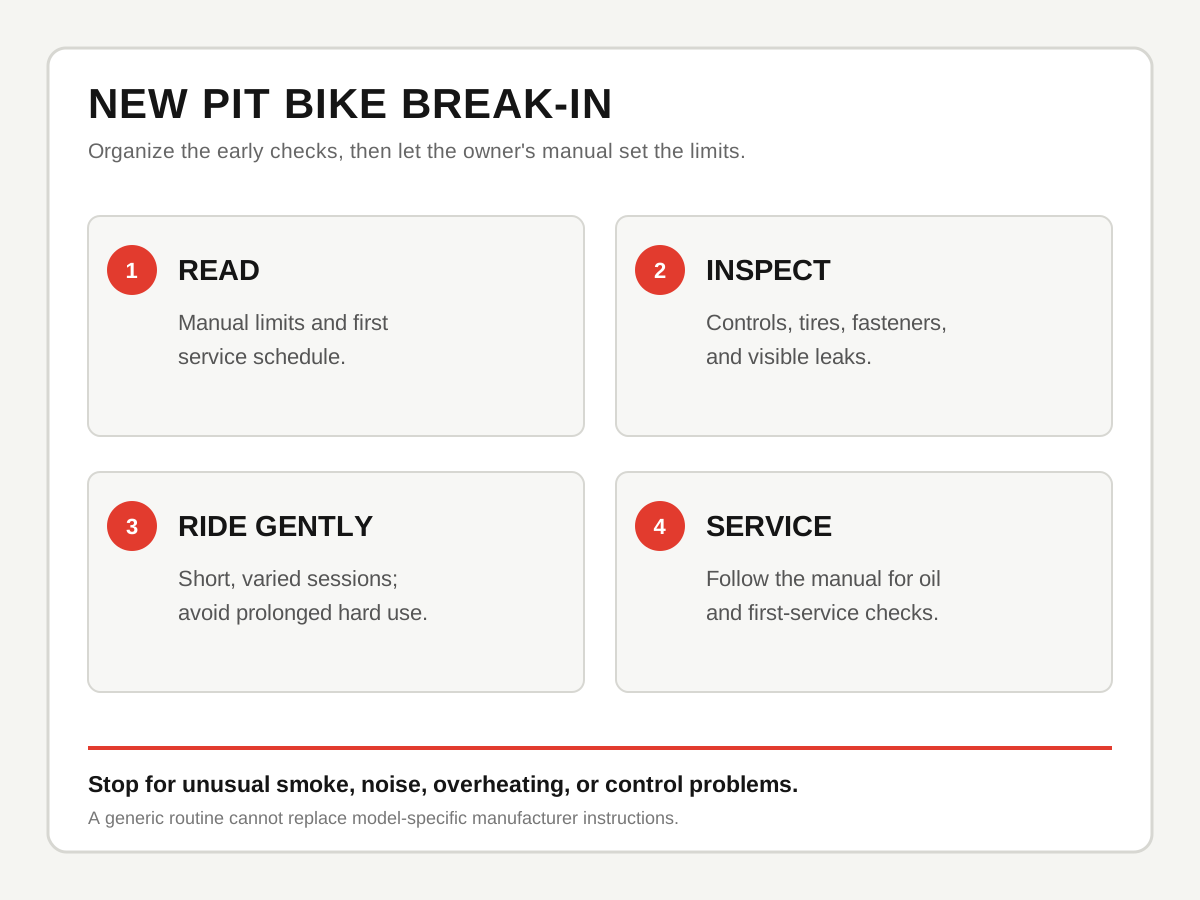
TL;DR: Start with the owner’s manual, inspect the bike before the first ride, and keep the early riding sessions gentle and varied. Avoid prolonged wide-open-throttle operation, monitor the engine and controls, and complete the first oil and fastener checks at the intervals specified for your bike. A generic break-in routine cannot replace the manufacturer’s instructions.
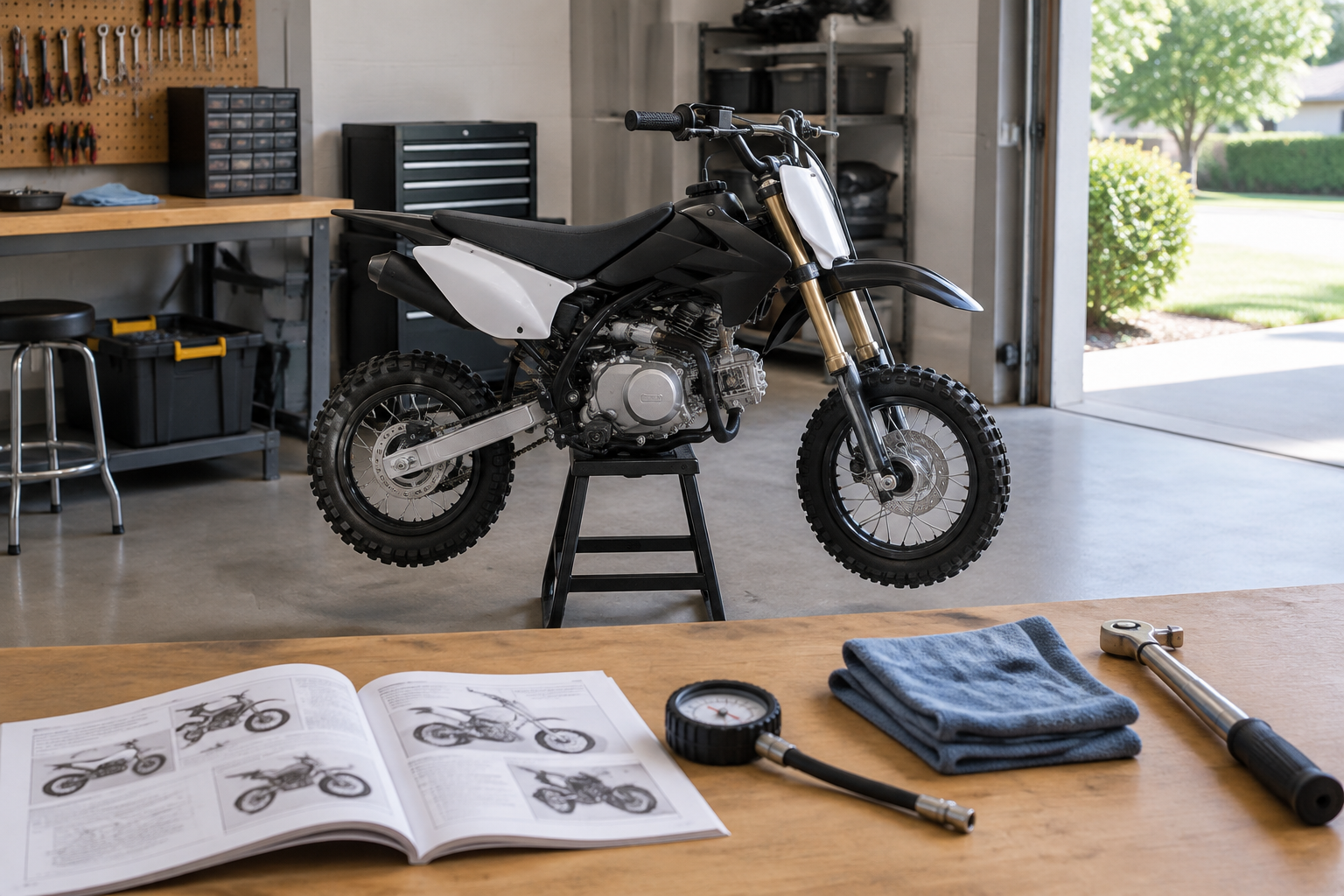
Breaking in a new pit bike helps the engine, clutch, transmission, brakes, tires, chain, and other moving parts settle into normal use. The exact procedure depends on the model. This guide covers common 110cc-125cc four-stroke pit bikes; electric models require the manufacturer’s battery and motor instructions instead.
We compare published specifications, seller information, owner feedback, and ownership considerations.
What You Need
Tools
- Owner’s manual and service schedule
- Basic metric socket and wrench set
- Screwdrivers
- Tire-pressure gauge
- Chain-adjustment tools
- Torque wrench, if the manual provides torque values
- Clean rags
- Work stand or stable support
- Drain pan and funnel for an oil change
Parts and fluids
- Correct motorcycle engine oil for your model
- Replacement oil filter or screen-cleaning supplies, if specified
- Replacement drain-plug washer, if required
- Air-filter cleaner and filter oil, where applicable
- Fuel approved by the manufacturer
- Thread-locking compound only where the manual calls for it
Time: Allow enough time for a complete pre-ride inspection, a short first ride, cooling, and a post-ride check. The manufacturer’s service schedule determines when the first oil change and adjustment checks are due.
For oil selection, see our guide to pit bike oil type. The correct fluid matters more than following a generic internet recommendation.
Step by Step
1. Read the manual before starting the engine
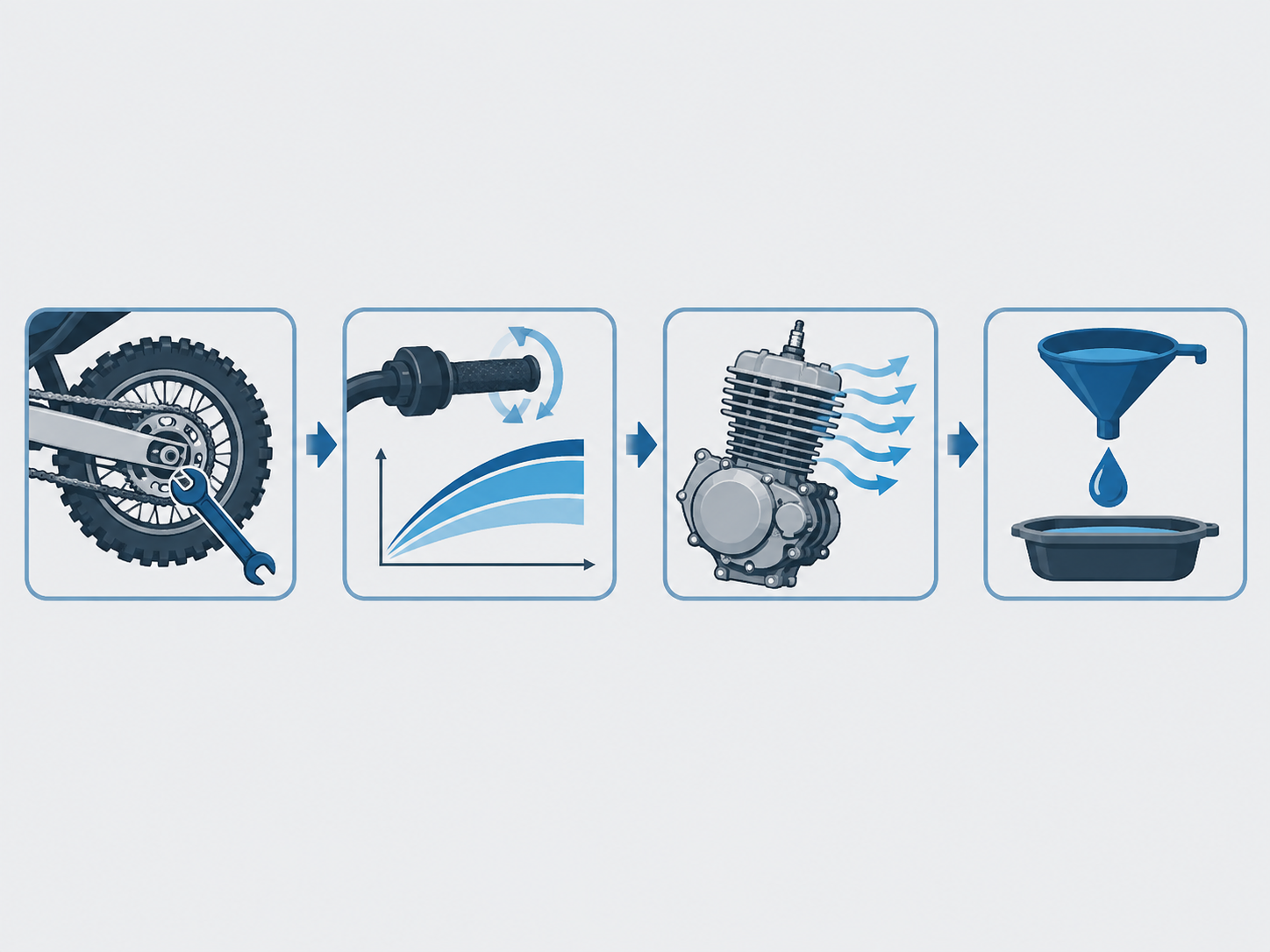
Look for the manufacturer’s instructions on:
- Break-in restrictions
- Fuel type
- Oil type and capacity
- First oil-change timing
- Valve-clearance checks
- Chain adjustment
- Fastener torque
- Maximum recommended engine speed
- Warranty requirements
Do not assume that every 110cc-125cc four-stroke uses the same oil quantity, valve clearance, chain slack, or service interval. These specifications vary by engine and chassis.
2. Inspect the assembled bike
Check the bike while the engine is off and cold.
Inspect:
- Front and rear axle hardware
- Handlebar clamps
- Brake-lever and pedal operation
- Throttle return
- Clutch-lever operation, if equipped
- Foot-peg and control mounting
- Chain alignment and lubrication
- Sprocket condition
- Tire condition and pressure
- Fuel lines and electrical connectors
- Engine and gearbox for leaks
- Air-filter installation
The seller or assembler may have completed some setup, but that does not confirm that every fastener and adjustment is correct. Stop and correct any loose control, leaking line, damaged tire, or sticking throttle before riding.
Use the pit bike safety checklist for a separate pre-ride inspection.
3. Start and warm the engine normally
Start the engine according to the manual. Let it reach normal operating temperature without holding a high engine speed.
Avoid extended idling as a substitute for riding. A motorcycle engine needs controlled load and changing engine speed during normal use, but it should not be forced to work hard while cold.
If the engine is difficult to start, repeatedly stalls, or produces unusual smoke or noise, stop the break-in process. The issue may be a setup or mechanical fault rather than a normal break-in characteristic. See our guides to pit bike starting problems and pit bike starts then dies.
4. Make the first ride short and gentle
Use a safe, private riding area with enough room to stop. Apply the throttle smoothly and vary the engine speed instead of holding one throttle position for a long period.
During the first ride:
- Avoid sustained wide-open throttle
- Avoid lugging the engine in a high gear
- Shift through the available gears smoothly
- Use moderate engine braking
- Apply the brakes progressively
- Avoid jumps, deep mud, long climbs, and racing
- Pay attention to clutch engagement and gear selection
The aim is controlled operation while the engine and chassis components begin to bed in. Hard acceleration and prolonged high load increase heat and stress before you know whether the bike has a setup problem.
5. Let the bike cool and inspect it again
After the first ride, park the bike on a stable surface and allow hot components to cool before touching them.
Check for:
- Oil, fuel, or coolant leaks, if the bike uses coolant
- Loose fasteners
- Chain slack or unusual chain noise
- Brake-pad movement or reduced braking
- Loose spokes
- Damaged hand controls
- New engine sounds
- Abnormal exhaust smoke
- Fluid levels specified by the manual
A chain that becomes loose quickly can damage the chain, sprockets, swingarm, or engine cases. Use the instructions in how to adjust a pit bike chain and confirm the correct slack measurement in your manual.
6. Continue with varied, moderate riding
For the next rides, gradually use more of the bike’s normal operating range while continuing to avoid long periods at maximum throttle or maximum load.
Vary:
- Engine speed
- Gear selection
- Acceleration
- Braking
- Terrain and load
Do not treat a stated break-in distance or engine-hour figure from another model as universal. Follow your own manual when it gives a specific schedule.
7. Complete the first service
Perform the first service at the manufacturer’s listed interval. It may include:
- Engine-oil replacement
- Oil-filter or oil-screen service
- Chain inspection and lubrication
- Fastener inspection
- Valve-clearance inspection
- Clutch adjustment
- Brake adjustment
- Air-filter inspection
- Cable and control checks
If the manual does not clearly identify the first-service requirements, contact the manufacturer, seller, or a qualified mechanic before using the bike hard. Our guide to changing pit bike oil covers the general process, but the correct oil quantity and service interval remain model-specific.
What to Avoid
- Running the engine at wide-open throttle for an extended period
- Holding the bike at one engine speed for a long ride
- Lugging the engine in a tall gear
- Racing before the first service
- Repeated hard launches
- Ignoring a new leak or mechanical noise
- Adjusting valve clearance or chain slack without checking the manual
- Assuming a seller’s assembly inspection replaces your own checks
- Washing contaminants into the air filter or electrical connectors
The main buying and ownership trade-off is simple: gentle early use reduces unnecessary stress, but break-in does not correct poor assembly or a defective part. Inspection is part of the process, not an optional extra.
Safety
- Wear a properly fitted helmet and protective riding gear. See the pit bike helmet and gear guide.
- Break in the bike only in a legal, controlled riding area.
- Keep clear of the exhaust, cylinder, engine oil, chain, and other hot or moving parts.
- Never inspect chain tension or rotating components with the engine running.
- Support the bike securely before working underneath or around the wheels.
- Keep fuel away from flames, sparks, heaters, and smoking materials.
- Do not ride if the throttle does not close automatically.
- Test the brakes at low speed before entering a larger riding area.
- Confirm whether the bike is legal to use where you plan to ride. Our guide covers pit bike street-legal requirements.
When to See a Mechanic
Stop riding and seek qualified help when you find:
- A throttle that sticks or fails to return
- Oil, fuel, or coolant leaking onto hot components
- Persistent knocking, grinding, or severe rattling
- Heavy or unusual exhaust smoke
- An engine that overheats
- Brakes that feel soft or fail to stop the bike
- A clutch that will not disengage
- Gears that repeatedly jump out
- A chain that comes off or cannot be aligned
- Electrical damage, burning smells, or repeated starting failure
An overheating engine should not be treated as a normal break-in symptom. Use the pit bike overheating guide to identify basic checks, then involve a mechanic if the cause is not clear.
FAQ
How long does a pit bike break-in take?
There is no universal break-in duration for every pit bike. Follow the period, distance, engine-speed limit, and first-service schedule in your owner’s manual. If those details are missing, confirm them with the manufacturer or seller.
Can I ride a new pit bike hard?
Avoid racing, prolonged wide-open-throttle use, repeated hard launches, and heavy loads until the manual’s break-in requirements and first service are complete. The exact limit is model-specific.
Should I change the oil after the first ride?
Only change it at the interval specified by the manufacturer unless the oil is contaminated or the engine develops a problem. Do not use a generic oil quantity or service interval without checking the manual.
Is idling enough to break in the engine?
No. Extended idling does not replace controlled riding, and it can create unnecessary heat. Warm the engine normally, then use short rides with changing engine speed and moderate load.
Does break-in apply to electric pit bikes?
Gasoline-engine break-in instructions do not automatically apply to electric dirt bikes or electric mini bikes. Follow the manufacturer’s instructions for battery charging, motor use, cooling, and initial inspection.
First-service checklist
- Confirm the break-in and first-service schedule in the owner's manual.
- Inspect oil, leaks, fasteners, chain slack, tire condition, brakes, and throttle return.
- Keep early rides short and varied instead of holding one engine speed for a long period.
- Stop if the engine overheats, smokes, leaks, loses power, or makes an unfamiliar noise.
- Record the completed inspection and ask the seller which warranty conditions apply.
Evidence and sources
- The Honda Powersports owner's-manual library is the primary source for model-specific break-in and first-service instructions on Honda off-road motorcycles.
- The Yamaha TT-R110 owner's manual provides another manufacturer example of break-in, inspection, and maintenance requirements for a small off-road motorcycle.
- The MSF T-CLOCS checklist supports checking tires, controls, oil, chassis, chain, fasteners, and brakes before riding.
These references show why break-in and first service must be model-specific. A generic duration, speed, engine load, oil interval, or torque is not independently verified for your bike unless its manufacturer states it.