How to Change Pit Bike Oil: Safe Step-by-Step Guide
TL;DR: Change the oil only after confirming that your pit bike uses a four-stroke engine and checking the owner’s manual for the approved oil type, capacity, drain-plug details, and service interval. Warm the engine briefly, switch it off, drain the old oil into a suitable container, reinstall the drain plug, add the specified amount, and check the level without overfilling. Use the guide to Pit Bike Oil Type for lubricant-selection details.
We compare published specifications, seller information, owner feedback, and ownership considerations.
This guide covers common maintenance procedures for gasoline 110cc-125cc four-stroke pit bikes. It does not replace your bike’s manual. Oil capacity, viscosity, drain-plug torque, filter design, and service intervals vary by engine.
If the available information does not identify your bike’s powertrain, confirm whether it is electric, gas, or another type before starting. An electric pit bike does not use engine oil, while a gasoline four-stroke engine does.
What You Need
Tools
- Motorcycle or four-stroke engine oil approved by your owner’s manual
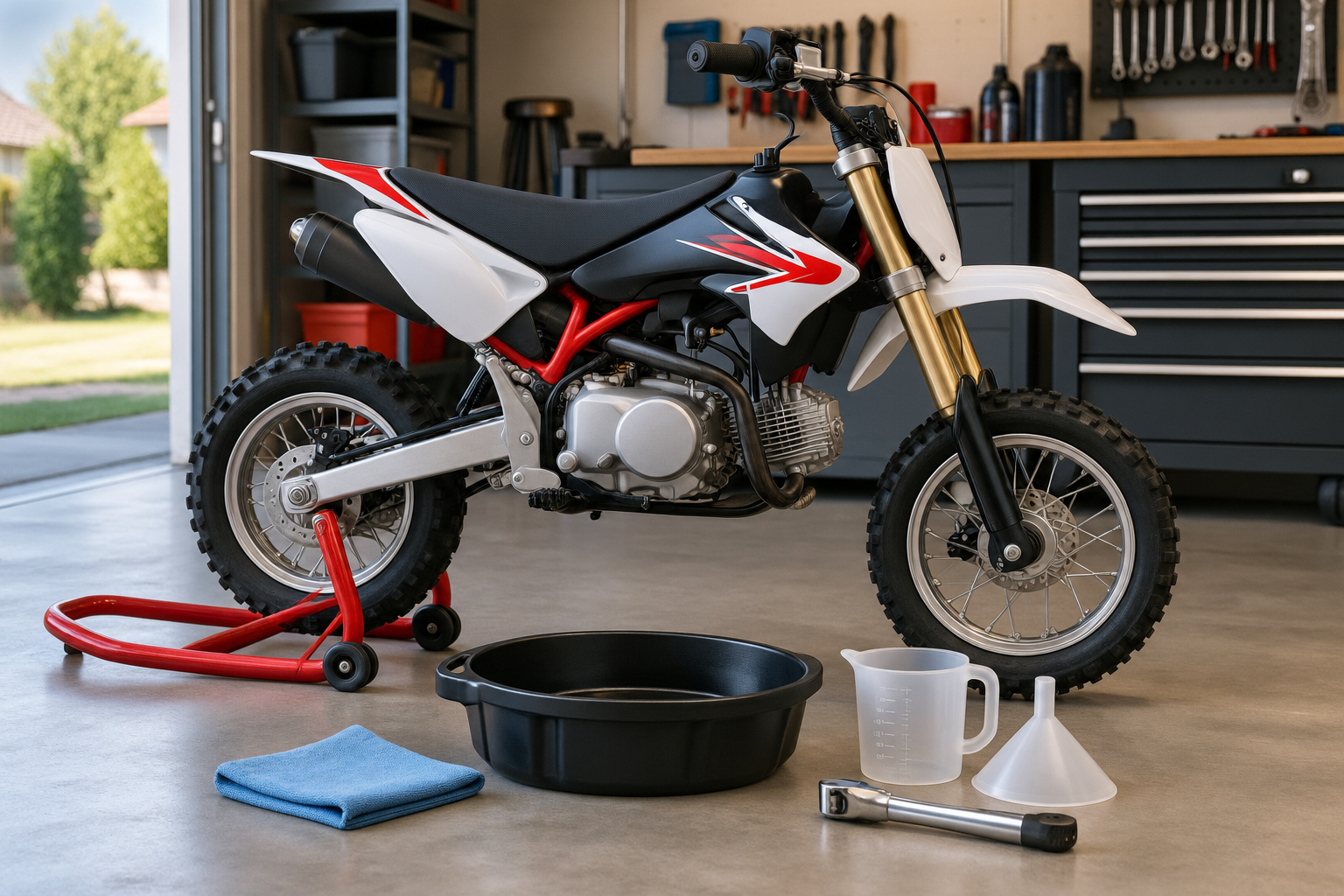
- Drain pan or oil-collection container
- Socket or wrench that fits the drain plug
- Funnel
- Measuring container
- Clean shop towels
- Gloves
- Eye protection
- Motorcycle stand or another stable way to keep the bike upright
Parts and supplies
- Replacement drain-plug washer or O-ring, if specified by the manual or damaged during removal
- Replacement oil filter or screen-cleaning supplies, if your engine uses a serviceable filter or screen
- Container for transporting used oil to a recycling facility
Time
Allow time for the engine to warm briefly, cool enough for safe handling, drain fully, and be checked after refilling. The seller or manufacturer does not list a universal completion time because access and engine design vary.
Before You Start
Confirm these details in the owner’s manual:
- Approved oil type and viscosity
- Oil capacity
- Drain-plug location
- Whether the engine has a replaceable oil filter, reusable screen, or centrifugal filter
- Whether the oil level is checked with the dipstick screwed in or resting in the filler opening
- Recommended oil-change interval
Do not use a capacity from another pit bike as a substitute. Even engines with similar displacement can have different oil-level procedures.
For parts and lubricant fitment, compare the manual with this pit bike parts compatibility guide. For model-specific context, the Apollo DB32 110cc pit bike page and TaoTao DB14 model page can help you identify the type of machine you own, but their listings do not replace your own manual.
Step by Step
1. Stabilize the bike
Place the pit bike on a firm, level surface. Keep it upright so the oil can drain and the final level can be checked accurately.
Make sure the engine is switched off and the bike cannot roll. A leaning bike can leave old oil in the crankcase and make the level reading unreliable.
2. Warm the oil briefly
Start the engine and let it run briefly so the oil becomes easier to drain. Do not work around a hot exhaust or hot engine case.
If the engine has recently been used, let it cool enough that you can work without risking burns. Warm oil drains more easily, but excessive heat increases the chance of injury.
3. Locate the filler and drain points
Identify the oil filler opening and the drain plug before loosening anything. Clean dirt from the area around both points.
Removing the filler cap or dipstick before draining can help air enter the crankcase. Keep the cap and dipstick clean so debris does not enter the engine.
4. Position the drain pan
Place the drain pan beneath the drain plug. Make sure it is wide and deep enough to catch the initial stream and any oil that runs along the engine case.
Oil may flow at an angle rather than straight down. Position the pan accordingly and keep absorbent material nearby.
5. Remove the drain plug
Using the correct tool, loosen and remove the drain plug carefully. Keep pressure on the plug as you finish unthreading it so it does not fall into the drain pan.
Allow the oil to drain until the flow becomes a slow drip. Do not touch the oil with bare hands, even if it appears only warm.
6. Inspect the plug and washer
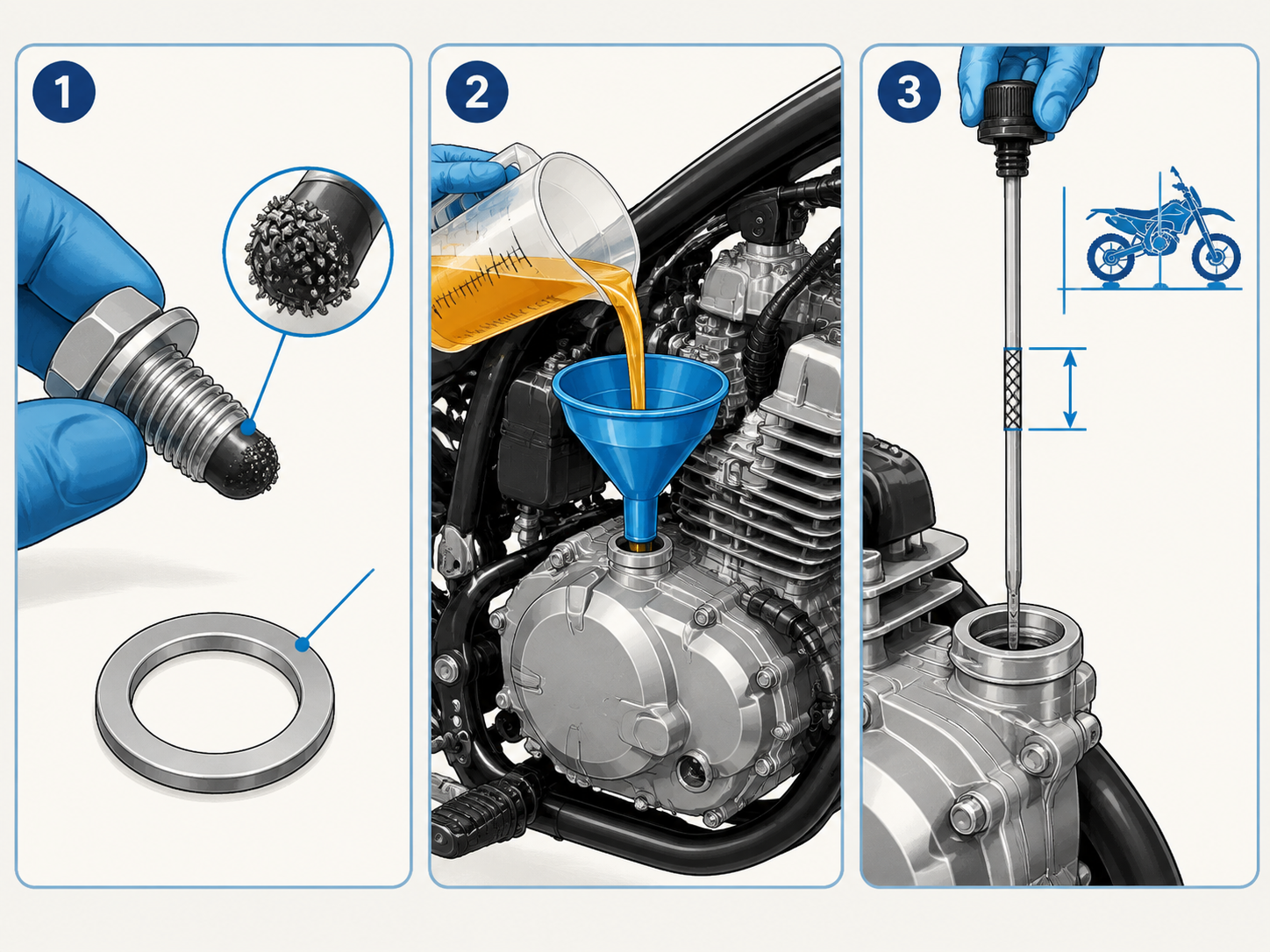
Clean the drain plug and inspect its threads, sealing surface, and any magnetic tip. Look for metal particles, damaged threads, or a crushed sealing washer.
A small amount of fine residue may require further assessment, while visible chips or heavy metal debris can indicate internal damage. Do not simply refill the engine and continue riding if the plug is badly damaged or the drained oil contains large metal fragments.
7. Reinstall the drain plug
Install a new washer or O-ring when the manual calls for one or when the existing seal is damaged. Thread the plug in by hand first to reduce the chance of cross-threading.
Tighten the drain plug to the torque listed in your manual. Do not treat a torque value from another engine as universal. Overtightening can damage the crankcase threads; insufficient tightening can cause a leak.
8. Service the filter or screen
If your pit bike has a replaceable oil filter, centrifugal filter, or cleanable oil screen, service it according to the manual.
Do not assume every 110cc-125cc engine uses the same filter arrangement. Some engines require additional cleaning steps, and forcing a cover or screen can damage the assembly.
9. Add the specified oil
Place a funnel in the filler opening and add the oil specified by the manual. Add less than the full listed capacity initially, then check the level using the procedure for your engine.
The seller does not list a universal oil capacity because this specification is engine-specific. Overfilling can cause operating problems, so do not pour in an unverified amount just because another pit bike uses it.
10. Check the oil level
Keep the bike upright and check the dipstick or sight window as instructed in the manual. If the dipstick is used, follow the manual’s instruction on whether to screw it in or rest it on the threads.
Add small amounts only when needed. Stop when the oil reaches the correct mark or window. Do not judge the level while the bike is leaning.
11. Run the engine and inspect for leaks
Start the engine and let it run briefly. Switch it off, wait according to the manual’s checking procedure, and inspect the drain plug, filter cover, and filler area for leaks.
Recheck the oil level and correct it if necessary. If oil leaks from the drain plug or filter cover, switch the engine off and repair the sealing problem before riding.
12. Dispose of the old oil
Transfer the used oil to a sealed container and take it to an approved oil-recycling location. Do not pour it onto the ground, into a drain, or into household waste.
Wipe away any spilled oil from the engine, frame, tires, and floor. Oil on a tire or brake component can reduce control.
Condensed oil-change procedure
- Confirm that the bike uses a four-stroke engine and retrieve the exact owner's manual.
- Identify the specified oil, capacity, level-check method, drain hardware, and service interval.
- Stabilize the bike, warm it only as directed, switch it off, and place a drain pan below the correct drain point.
- Drain the oil, inspect the plug and sealing washer, then reinstall them using the model-specific procedure and torque.
- Add oil gradually and stop at the manual's stated level rather than a generic pit-bike quantity.
- Run the engine only as directed, switch it off, recheck the level, and inspect for leaks before riding.
Safety
- Work in a well-ventilated area away from flames, sparks, and cigarettes.
- Wear gloves and eye protection.
- Support the bike securely before loosening the drain plug.
- Keep children and pets away from used oil and tools.
- Never crawl under a bike supported only by an unstable stand.
- Avoid contact with hot oil, exhaust parts, and engine cases.
- Do not start the engine if the drain plug is missing or the oil level is unknown.
- Clean oil from tires, brake discs, foot pegs, and controls before use.
- Keep used oil in a labeled, sealed container until recycling.
A post-service safety check should include the oil level, drain plug, filter cover, controls, chain, and brakes. The pit bike safety checklist covers additional checks before riding.
When to See a Mechanic
Stop the job and seek professional help when:
- The drain plug will not loosen without excessive force.
- The drain-plug threads are stripped or cross-threaded.
- The engine case is cracked.
- The oil contains large metal pieces or unusual quantities of metal debris.
- The oil is heavily contaminated with fuel or coolant.
- The engine makes new knocking, grinding, or rattling noises after the oil change.
- The oil-pressure warning system indicates a problem, if fitted.
- Fresh oil continues to leak after the plug or filter cover has been correctly serviced.
- You are unsure whether the engine uses a filter, screen, or centrifugal filter.
A mechanic should also inspect the bike if the oil level repeatedly drops without an obvious external leak. Continuing to ride with low oil can cause serious engine damage.
FAQ
How often should I change pit bike oil?
The correct interval depends on the engine, oil, operating conditions, and manufacturer instructions. The seller does not list one universal interval for all pit bikes. Check your own bike’s manual, especially if the bike is used in dust, racing, deep mud, or frequent short rides.
What oil should I use?
Use the viscosity and specification listed in your owner’s manual. The Pit Bike Oil Type guide explains the factors to check, but it should not override the manufacturer’s instructions.
Can I use automotive car oil?
Do not assume automotive oil is suitable. Some pit bike clutches share engine oil, so the oil may need motorcycle-specific clutch compatibility. Confirm the required specification in your manual.
How much oil does a pit bike take?
The correct capacity is engine-specific and is not universal across 110cc-125cc four-stroke pit bikes. The seller does not list one standard capacity. Add oil gradually and use the dipstick or sight-window procedure in your manual.
Why is the new oil already dark?
Oil can darken quickly after entering an engine because it mixes with residue and combustion byproducts. Dark color alone does not identify the cause. If the oil smells strongly of fuel, contains visible metal, looks milky, or the engine runs abnormally, have the bike inspected.
Evidence and sources
- Use the Honda Powersports owner's-manual library to retrieve the oil type, capacity, drain-plug procedure, level-check method, and service interval for a specific Honda model.
- The MSF T-CLOCS checklist includes engine oil, other fluids, and leak checks as part of the pre-ride inspection.
The sequence above is general. Oil capacities, viscosities, filters, screens, torque values, and intervals are not independently verified for every pit bike and must come from the exact bike or engine manual.