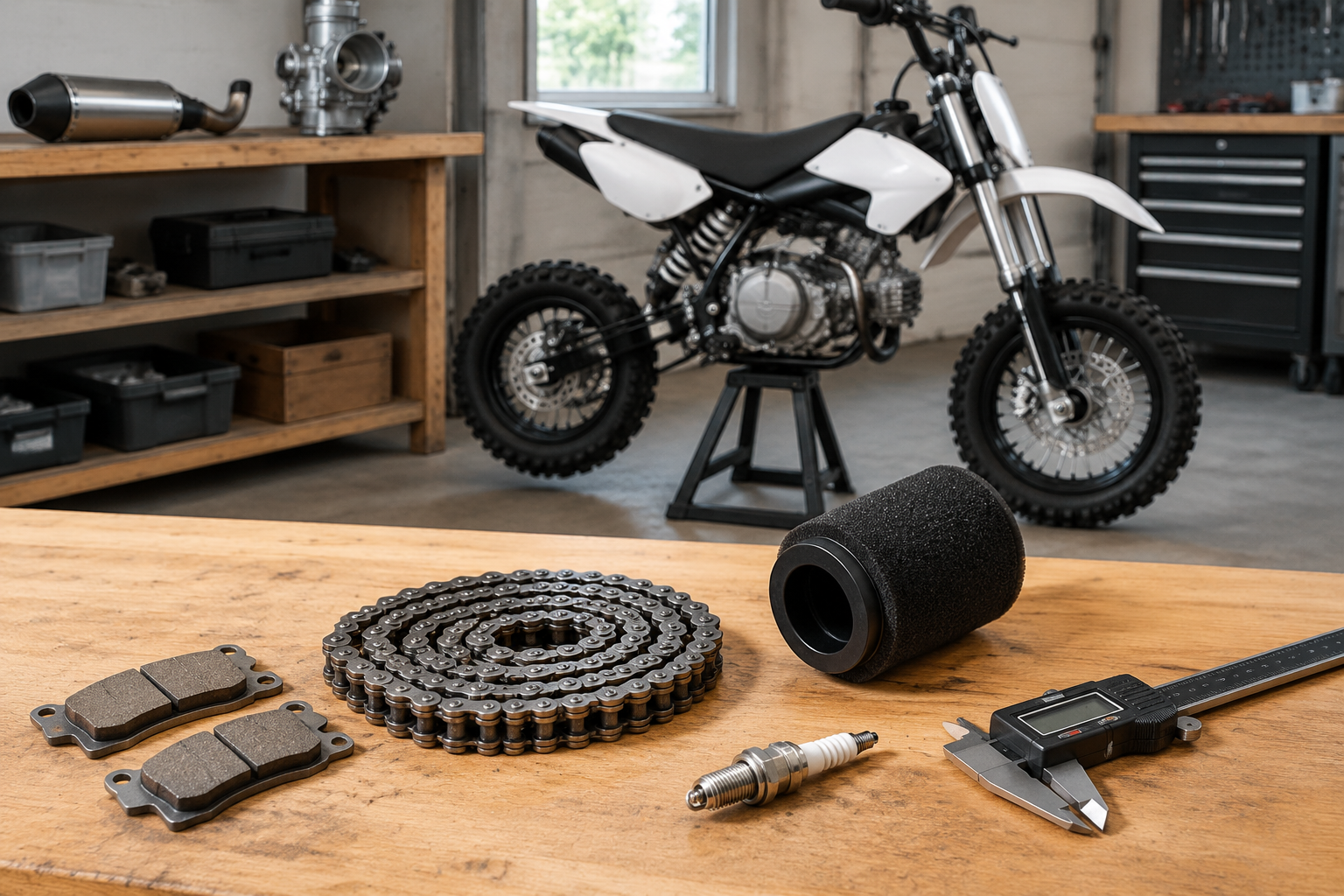
Pit Bike Parts & Upgrades: What to Buy First
The short answer: Buy parts that restore safe, reliable operation before parts that promise more power. Replace damaged tires, brakes, controls, chains, sprockets, bearings, filters, and leaking components first. Tune or upgrade the carburetor, suspension, exhaust, or engine only after diagnosing the bike and confirming exact fitment.
There is no universal “fits pit bikes” part. Match part number, dimensions, mounting pattern, connector pinout, chain and wheel size, and the seller's written fitment list.
Priority 1: Safety-Critical Wear and Damage
Inspect the bike before shopping. Stop and repair:
- Damaged tires, tubes, rims, spokes, axles, or wheel bearings
- Worn or contaminated brake pads or shoes
- Leaking hydraulic parts or frayed brake cables
- A throttle that binds or does not close
- Cracked bars, levers, foot pegs, frame, or suspension mounts
- A chain or sprocket that can derail
- Fuel leaks, damaged battery cases, melted wiring, or unsafe connectors
The correct replacement must match the installed system and service manual. The safety checklist gives the full inspection order.
Priority 2: Routine Service Parts
Keep the bike reliable with the exact oil, filters, spark plug, sealing washers, chain lubricant, and other consumables specified by the manufacturer. Do not order by displacement alone.
Use the pit bike oil guide and air-filter service guide to identify what must be confirmed. A foam filter, paper element, screen, or oil filter is not interchangeable merely because the bike is 110cc or 125cc.
Priority 3: Chain and Sprockets
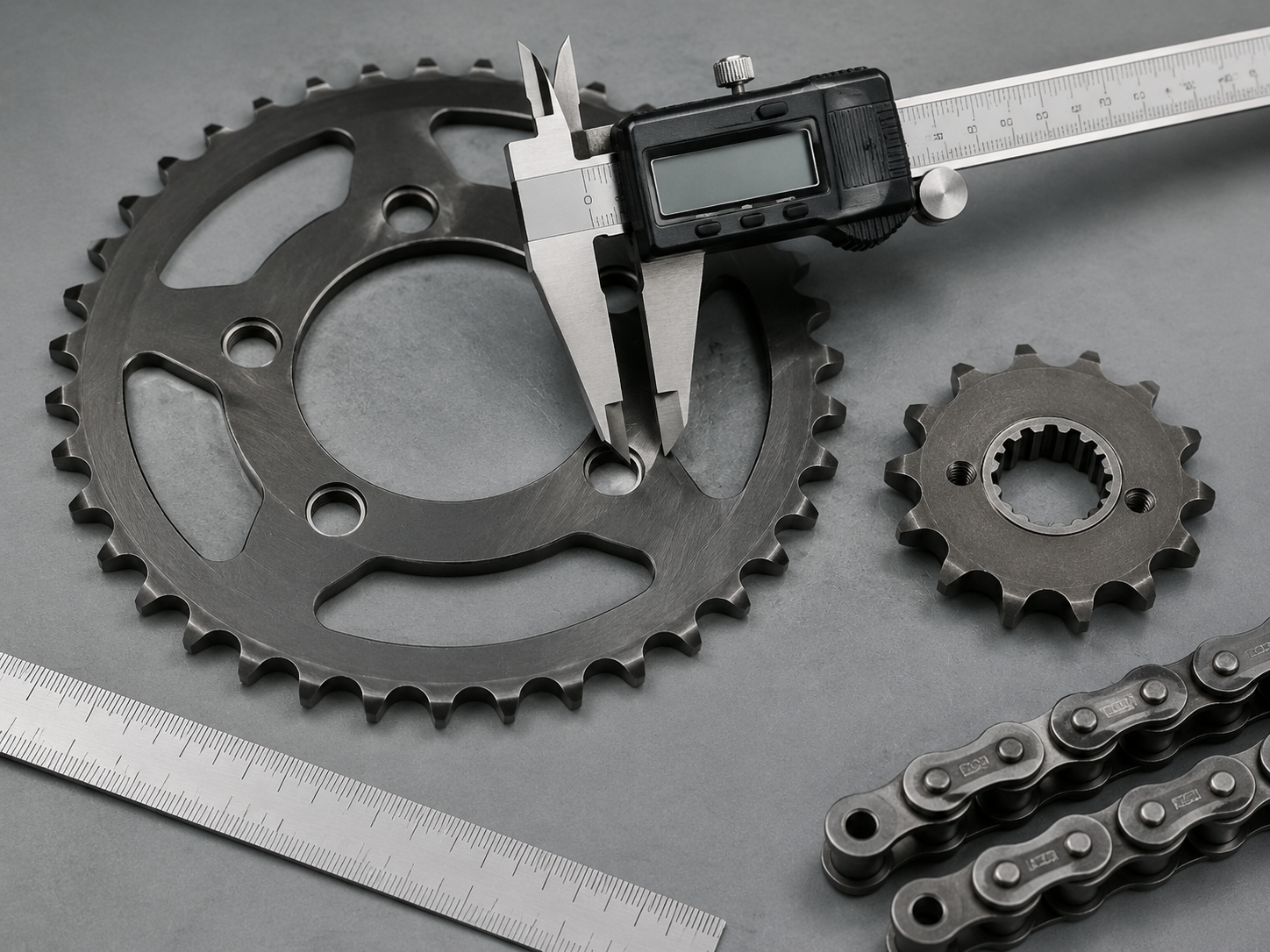
Replace a worn chain and sprockets as a matched drivetrain decision. Confirm chain pitch and width, link count, front-sprocket spline and offset, rear bolt pattern and center bore, tooth count, clearance, and alignment.
Changing gearing trades acceleration, speed at a given engine rpm, chain clearance, and load on the drivetrain. Use the chain-size guide and sprocket guide before ordering.
Priority 4: Tires for the Actual Surface
Choose tires by wheel and tire markings, rim width, tube, clearance, load and speed requirements, and intended surface. A well-reviewed tire in the wrong size is not a useful upgrade.
Confirm front and rear sizes separately. The pit bike tire-size guide explains how to read the markings and measure available clearance.
Priority 5: Controls and Ergonomics
Bars, grips, levers, pegs, cables, and controls can improve fit only when their dimensions and routing match. Check clamp diameter, rise, width, sweep, pivot, perch, cable ends, housing length, connector position, and full steering movement.
After installation, confirm throttle return, brake operation, clutch free play where fitted, kill-switch access, and cable or hose clearance. Do not modify controls to compensate for a bike that is fundamentally the wrong physical size.
Carburetor: Diagnose Before Replacing
A bike that bogs, stalls, or will not idle may have stale fuel, restricted flow, a dirty pilot circuit, intake leak, choke fault, valve issue, or weak ignition. Replacing the carburetor first can add another unknown.
If replacement is justified, confirm bore, manifold and air-filter diameters, flange or spigot design, cable end, choke, fuel-inlet position, clearance, jet availability, and engine requirements. Follow the carburetor tuning guide after fitment is established.
Suspension: Service and Fit Before “Stiffer”
Inspect forks, shock, linkage, bearings, seals, springs, sag, travel, and mounting points. A stiffer spring or longer fork can change ride height, steering geometry, brake-hose length, chain behavior, and rider reach.
Use spring and damping guidance for the exact suspension and rider load. Do not buy from total length or a model-name claim alone.
Exhaust and Intake Upgrades
An exhaust or open filter can change noise, fueling, heat, legal compliance, and event eligibility. Confirm mounting, frame and body clearance, exhaust-gasket size, heat shielding, sound rules, and required carburetor or fuel-injection changes.
More noise is not proof of more usable power. Keep the original parts until the modified bike runs reliably and remains eligible for its riding area or race class.
Engine Swaps Come Last
An engine kit can require matching mounts, countershaft position, chain line, sprockets, intake, exhaust, wiring, ignition, controls, cooling, brakes, frame capacity, and legal or competition rules. A listing naming several common bikes does not prove bolt-in compatibility.
Before buying, obtain a dimensional drawing, wiring diagram, included-parts list, warranty terms, and written fitment confirmation. Budget for the supporting parts and qualified installation, not only the engine price.
What to Send a Parts Seller
Provide:
- Bike brand, exact model, and year where known
- Engine maker and model code
- Existing part number and clear photographs
- Critical measurements with units
- Wheel, tire, chain, and sprocket markings where relevant
- Connector photographs and pinout for electrical parts
- Mounting-hole spacing, shaft or axle diameter, and offset
- The intended riding use and any class rules
Keep the seller's written response with the order. Compare the delivered part before installation.
FAQ
What should I upgrade first?
Fix safety and wear problems first, then reliability and rider controls. Performance parts come after the bike is correctly serviced and the limitation is diagnosed.
Do 110cc pit bike parts fit every 110cc bike?
No. Displacement does not establish frame, engine family, chain, wheel, brake, cable, connector, or mounting compatibility. See Which Parts Fit a 110cc Pit Bike?.
Will a bigger carburetor make the bike faster?
Not automatically. An oversized or poorly tuned carburetor can reduce response and make starting or idle worse. Match it to the engine and intended setup.
Should I replace only the chain?
Inspect both sprockets and alignment. A new chain on worn or mismatched sprockets can wear quickly and engage poorly.
Is an engine swap cheaper than buying another bike?
The engine price is only part of the cost. Include fitment, wiring, intake, exhaust, chain line, controls, cooling, brakes, labor, parts support, and eligibility.
Evidence and Sources
- The JT Drive Chain range provides chain dimensions and selection references.
- The Michelin motorcycle tire-marking guide explains tire-size markings.
- Use the Honda Powersports owner-manual library for exact-model service and replacement guidance on supported Honda models.
These sources support the selection method. The installed part, exact manual, measurements, and written fitment confirmation control the purchase.