Pit Bike vs Dirt Bike: Which Should You Buy?
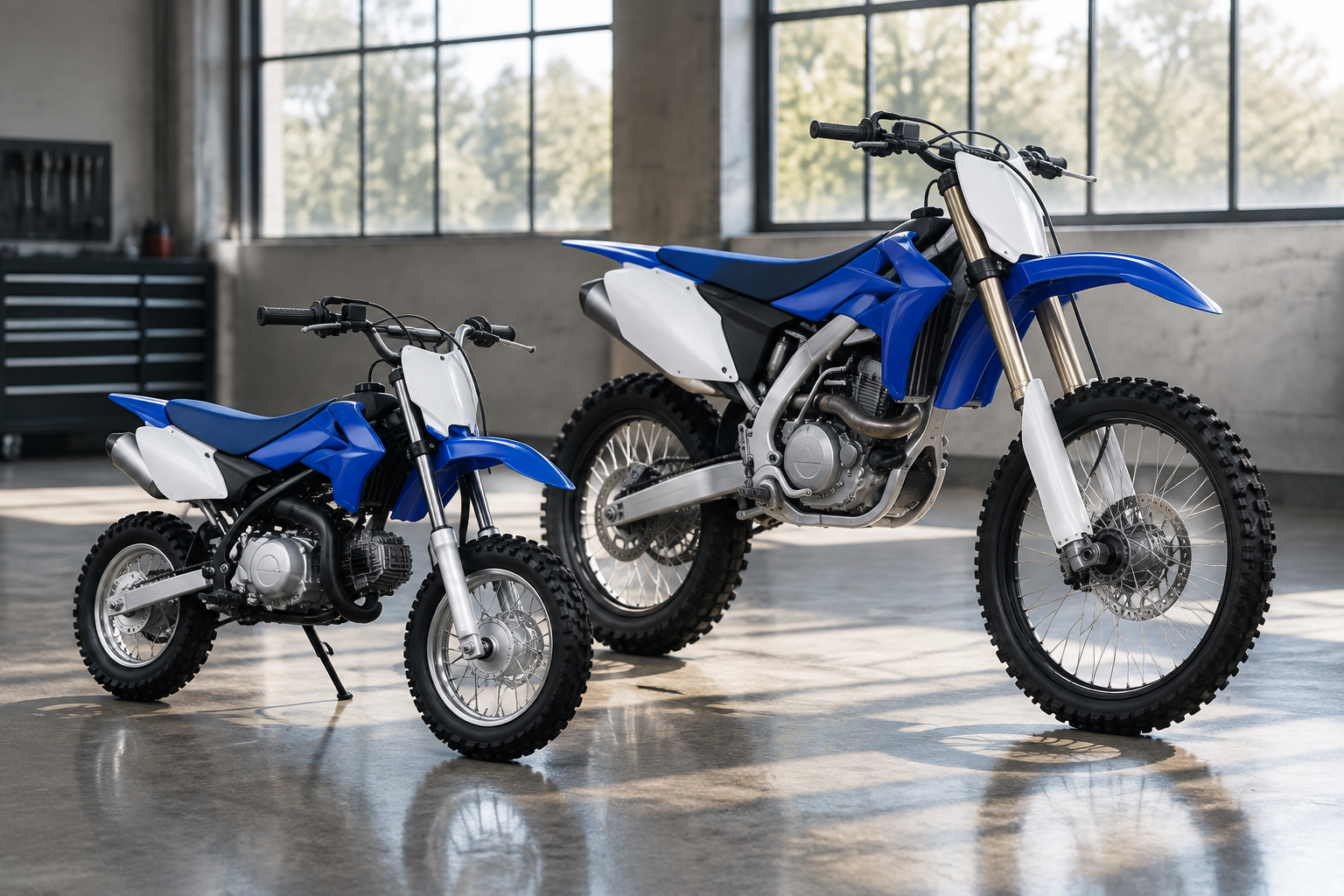
The short answer: Choose by rider fit, controls, terrain, and the exact seller listing, not by the category name alone. In our data, the Apollo DB-X18 pit bike is listed with a 125cc engine, 32-inch seat, 50 mph claimed top speed, and $869 price. The RPS Hawk dirt bike record lists a 250cc engine, 35.4-inch seat, 75 mph claimed top speed, and $1,369 price. These are two seller records, not universal specifications for every pit bike or dirt bike.
Who this comparison is for
This guide is for a buyer deciding between a compact off-road motorcycle and a larger dirt-bike-style machine. It does not assume that every smaller bike fits a child or that every larger bike fits an adult. Seat height, inseam, control reach, vehicle weight, rider limit, and experience all matter.
The examples come from the supplied product database. Their specifications are seller-listed or source-reported and are not independently verified by PitBikeHQ.
Evidence at a glance
| Decision point | Apollo DB-X18 pit bike record | RPS Hawk dirt bike record | Evidence limit |
|---|---|---|---|
| Engine | 125cc | 250cc | Seller or source claim; not a power measurement |
| Seat height | 32 inches | 35.4 inches | Useful for comparison, but not enough to prove rider fit |
| Top speed | 50 mph | 75 mph | Seller claims; not PitBikeHQ speed tests |
| Price | $869 | $1,369 | Snapshot prices that can change |
| Transmission | 4-speed manual | Not listed in the supplied comparison record | Confirm controls on the exact listing |
| Intended use | Seller identifies DB-X18 as off-road only | Product name describes an off-road dirt bike | Neither record establishes public-road legality |
The differences that affect the decision
Rider fit
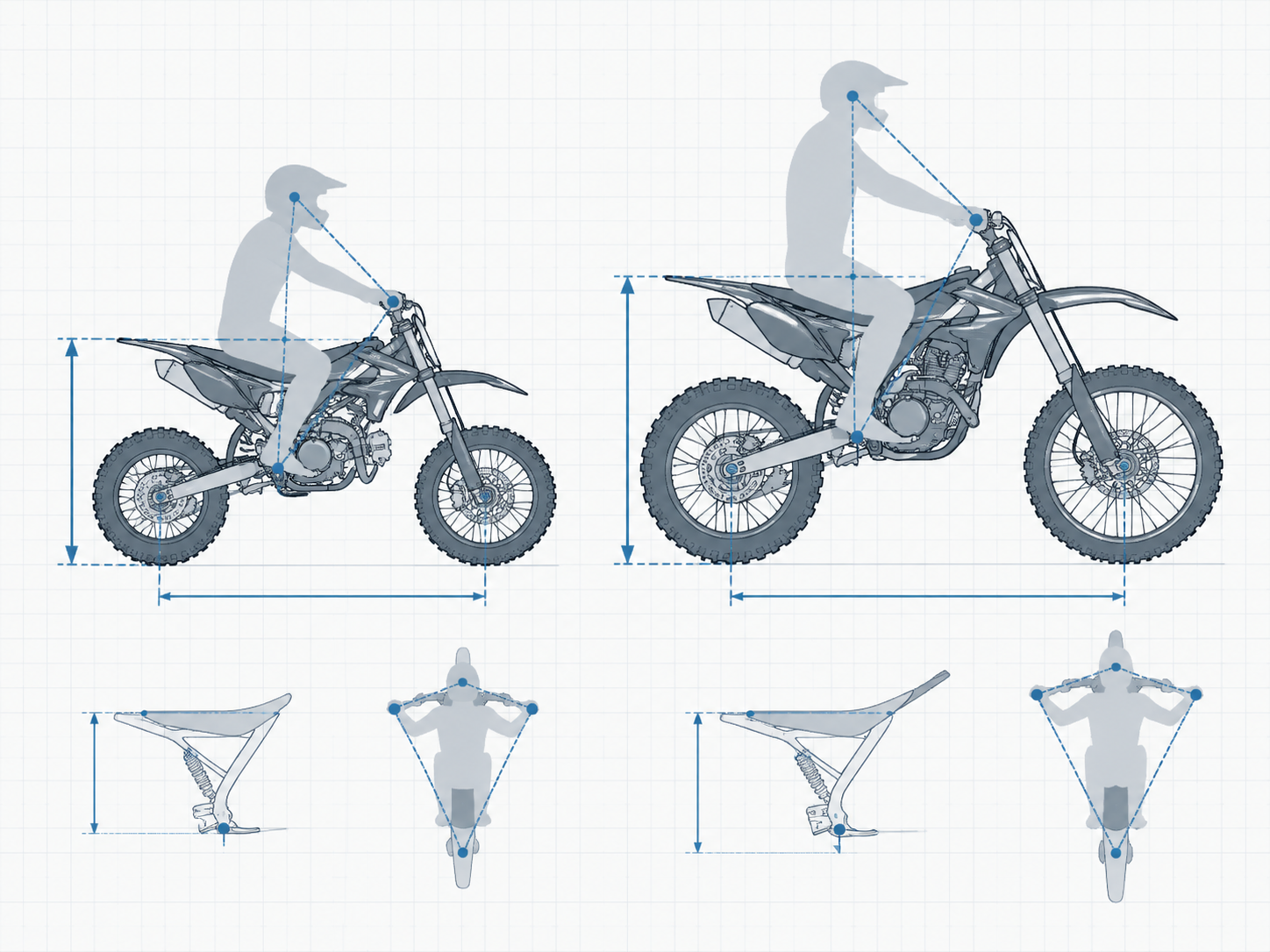
The DB-X18 seller lists a 32-inch seat, while the Hawk record lists 35.4 inches. A lower seat can make it easier for some riders to reach the ground, but neither number proves that a rider can operate the controls safely. Sit on the exact bike where possible or ask the seller for inseam, rider-height, control-reach, and weight-limit guidance.
Avoid the shortcut that a pit bike automatically fits a young rider. A compact frame can still be heavy, fast, or physically awkward for a particular person.
Engine and controls
The Apollo record lists a 125cc engine and 4-speed manual transmission. The Hawk record lists a 250cc engine but does not provide a transmission detail in the supplied comparison data. Engine displacement alone does not establish throttle response, torque, gearing, clutch feel, or beginner suitability.
A new rider who is also learning a manual clutch has more tasks to coordinate. Confirm the shift pattern, clutch operation, starting system, and throttle controls before treating either machine as beginner-friendly.
Speed evidence
The 50 mph and 75 mph figures are seller claims. They are useful for identifying that neither example should be treated as a low-speed toy, but they do not predict speed for a particular rider, surface, load, gearing, altitude, or mechanical condition.
Do not choose the faster figure as a quality score. Brakes, tires, suspension, rider training, terrain, and available riding space matter more than a claimed maximum speed.
Terrain and legal use
The Apollo source describes the DB-X18 as off-road only. The Hawk product name also identifies off-road use. That means the evidence supports planning for private property, a track, or another permitted off-road area, subject to local rules.
Neither a headlight nor a dirt-bike appearance establishes registration or street legality. Check the vehicle documents and your state motor vehicle agency before assuming public-road use is possible.
Price and ownership cost
The supplied prices are $869 for the Apollo example and $1,369 for the Hawk example. The purchase price does not include shipping, assembly, safety equipment, maintenance, fuel, registration, or replacement parts unless the seller explicitly says otherwise.
Before ordering, compare the availability of chains, sprockets, tires, brake parts, filters, levers, and model-specific bodywork. A lower purchase price is less useful when the seller cannot document parts support.
How to choose
- Choose the compact example only if its seat, controls, rider limit, and claimed speed fit the intended rider and permitted riding area.
- Choose the larger example only if the rider can manage its dimensions and controls and the terrain justifies the larger engine record.
- Reject either listing when the seller cannot provide the VIN or identification details, assembly instructions, warranty terms, or model-specific replacement-parts path.
- For a child or new rider, prioritize documented fit, adult supervision, speed control, brakes, protective gear, and a closed riding area over engine size or styling.
Questions to ask both sellers
- What rider height, inseam, age, and weight limits apply to this exact model?
- What are the vehicle weight, wheel sizes, brake type, and suspension specifications?
- Is the speed figure measured, estimated, limited by a mode, or dependent on gearing?
- What assembly and pre-delivery inspection are required?
- Which warranty and replacement-parts terms apply to this seller and listing?
- What documents identify the bike, and is it explicitly restricted to off-road use?
FAQ
Is a pit bike always smaller than a dirt bike?
The two records compared here show a lower seat and smaller engine for the pit bike, but category labels do not guarantee dimensions. Compare the exact measurements for the two products you are considering.
Can adults ride a 125cc pit bike?
The engine size does not answer rider fit. Confirm seat height, rider limit, vehicle weight, control reach, and riding position before deciding.
Is a 250cc dirt bike automatically better for trails?
No. Terrain suitability also depends on tires, suspension, gearing, brakes, ground clearance, rider skill, and the seller's intended-use statement.
Are the listed top speeds independently verified?
No. They are seller claims from the source records, not PitBikeHQ ride tests.
Which option is better for a beginner?
Neither category is automatically beginner-safe. Choose the exact bike whose fit, controls, speed management, braking, condition, and riding environment match the rider.
Sources and evidence notes
- MotoBuys Apollo DB-X18 listing is the seller source for the Apollo example.
- TX Powersports RPS Hawk 250 listing is the product source supplied for the Hawk example; the database separately identifies MotoBuys as the seller, so confirm the actual seller before purchase.
Prices and specifications are source snapshots checked in August 2026. Seller claims remain seller claims even when linked directly.