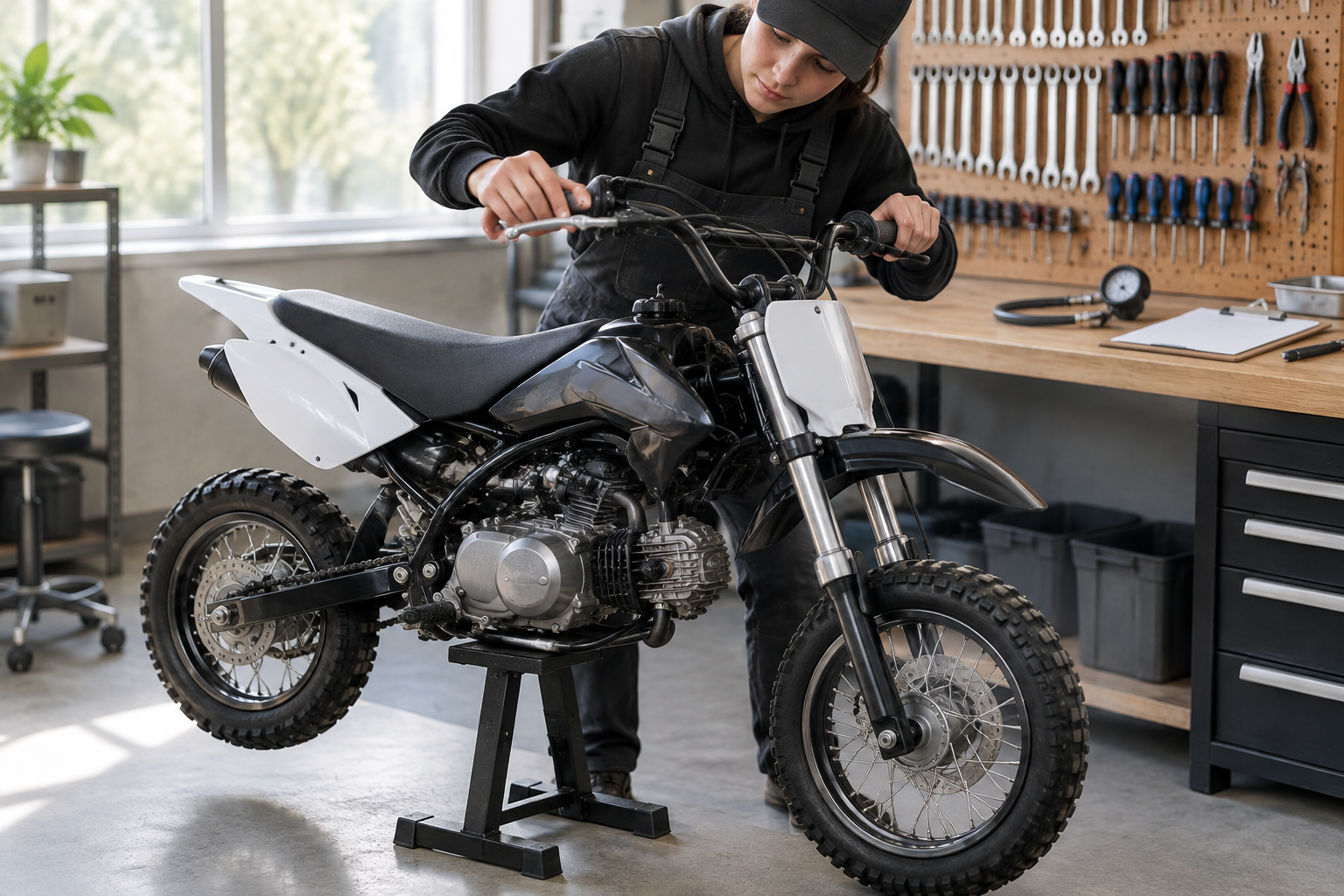
Pit Bike Safety Checklist: Pre-Ride and Legal Checks
The short answer: Before every ride, check the throttle return, kill switch, brakes, tires, wheels, chain, sprockets, axles, leaks, loose controls, protective gear, and riding area. Do not ride when a control binds, a brake leaks or feels weak, a tire or wheel is damaged, the chain can derail, or fuel or battery damage is visible. Confirm permission and local rules before entering public roads, trails, parks, or other land.
Before-Every-Ride Checklist
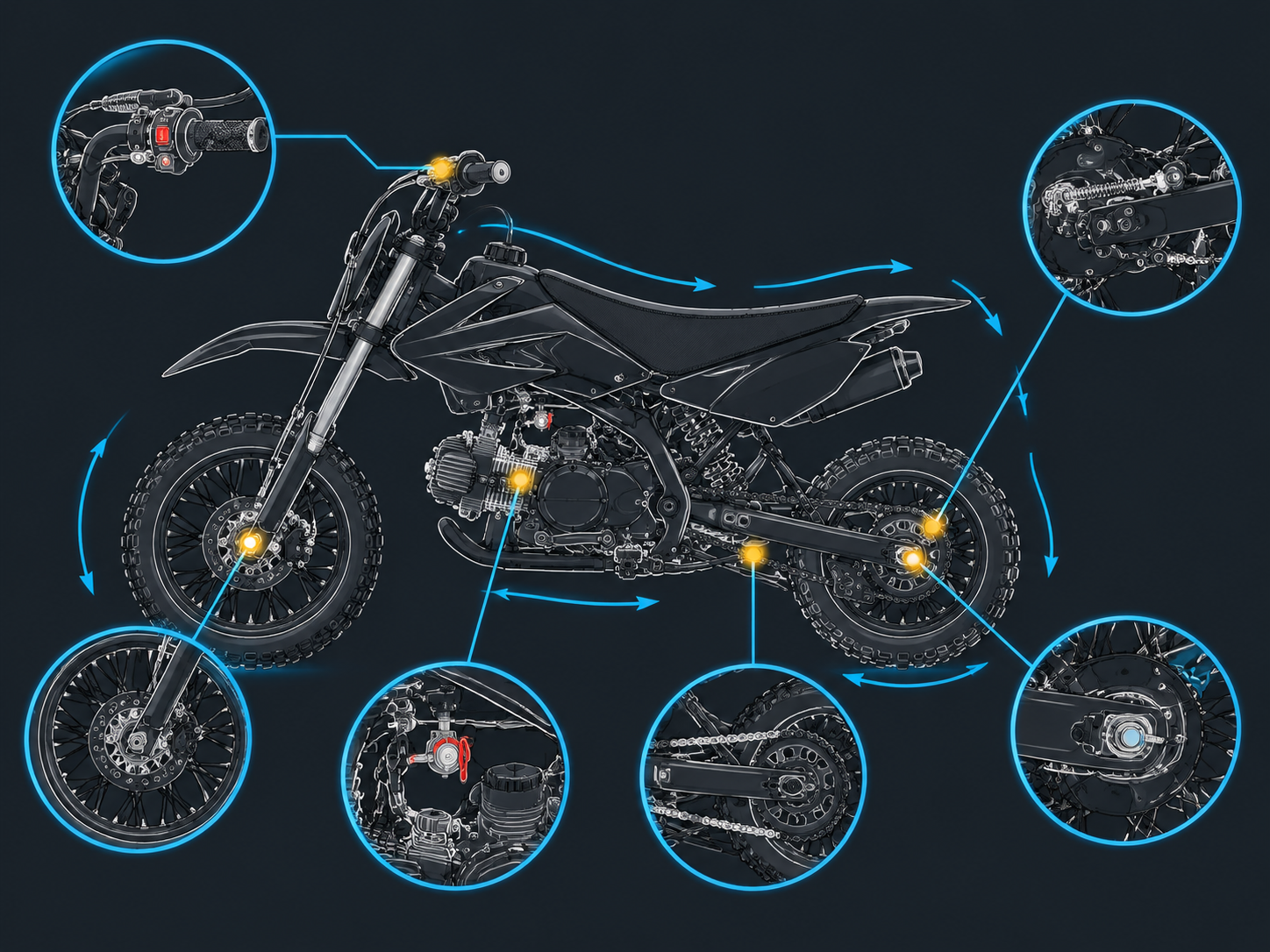
- The throttle moves smoothly and snaps closed at every handlebar position.
- The kill switch, key, and tether work where fitted.
- Front and rear brakes apply, release, and feel predictable.
- Tires have no cuts, cracks, exposed casing, bulges, or embedded objects.
- Tire pressure matches the bike or tire documentation.
- Rims, spokes, axles, and wheel bearings show no looseness or damage.
- Chain condition, lubrication, slack, and alignment match the exact manual.
- Sprocket teeth, guards, and adjusters are secure and serviceable.
- No fuel, oil, coolant, brake-fluid, or battery leak is visible.
- Handlebars, levers, foot pegs, engine mounts, exhaust, and suspension hardware are secure.
- The air filter and intake are installed and sealed.
- Helmet and protective gear fit and fasten correctly.
- The riding area is permitted, clear, and appropriate for the rider and bike.
If a check fails, fix the cause before riding. A checklist does not replace the service intervals and limits in the exact owner manual.
Controls and Brakes
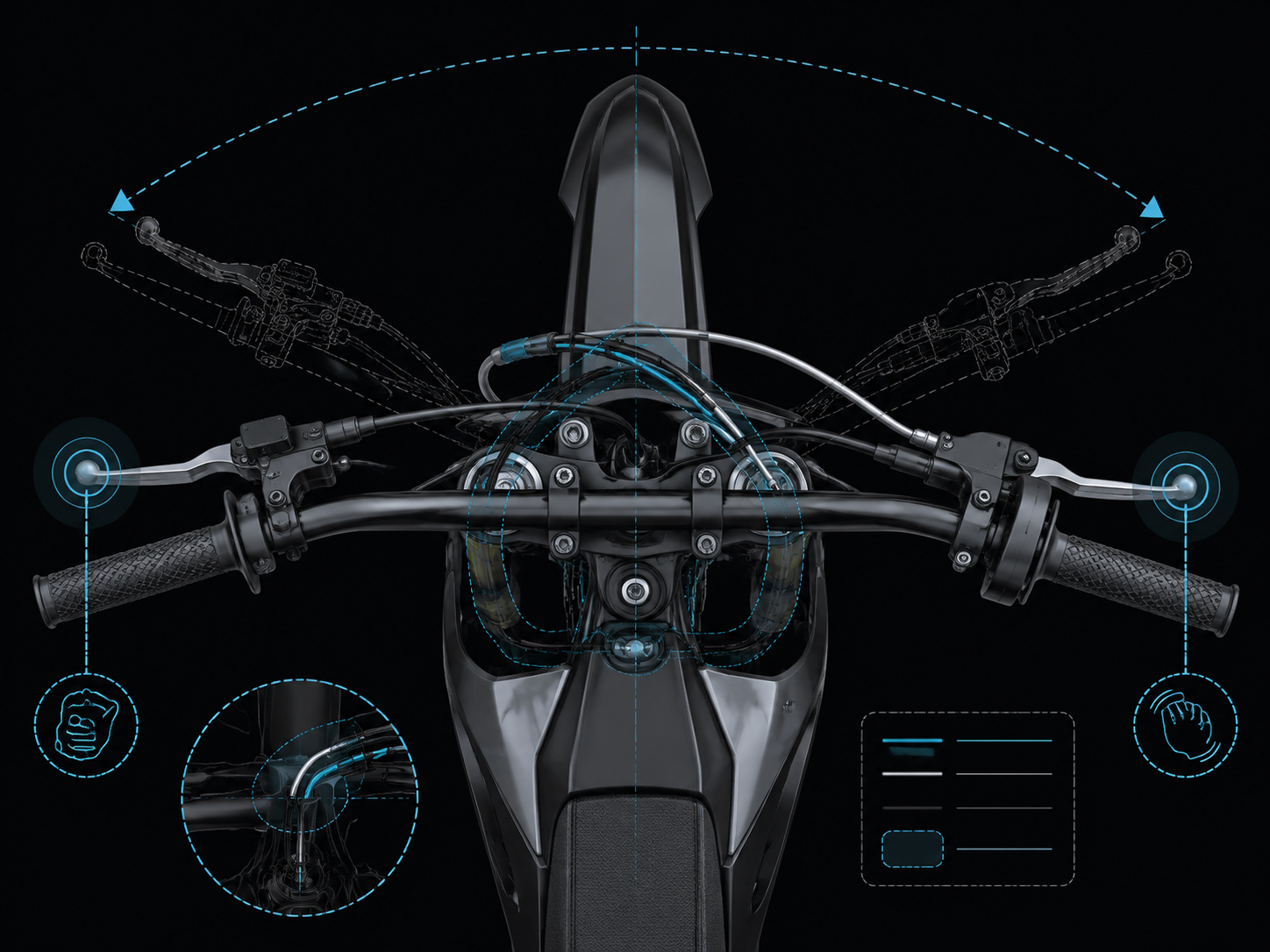
Turn the handlebars fully left and right while checking throttle return, cable routing, brake hoses, wiring, and fuel lines. No control should tighten, pull, or change engine speed as the bars move.
Apply each brake while stationary. Stop if a lever reaches the grip unexpectedly, a pedal feels loose, hydraulic fluid leaks, a cable is frayed, a brake drags heavily, or the wheel is not held predictably.
Use the brake service guide for further inspection. Brake free play, wear limits, fluid, and torque values are model-specific.
Tires, Wheels, and Steering
Inspect tread and sidewalls, then set pressure to the specified range. Check spokes, rims, axle hardware, wheel bearings, fork condition, steering movement, and swingarm play.
Do not ride with a bent or cracked rim, loose axle, rough bearing, damaged tire, or steering that catches or has unexplained play. Confirm replacement dimensions with the pit bike tire-size guide.
Chain and Sprockets
With the engine off, inspect the chain for stiff links, rust, damaged rollers, tight spots, and poor lubrication. Check sprocket teeth, chain guards, axle position, adjusters, and alignment.
Measure slack at the point and suspension condition specified by the manual. Too-tight and too-loose chains can both cause damage or derailment; the chain-adjustment guide explains the general procedure.
Leaks, Fuel, and Battery Condition
Look beneath and around the engine, fuel system, cooling system where fitted, brakes, forks, and shock. Investigate any fresh fluid before starting.
For an electric bike, inspect the battery, charge port, connector, and wiring for swelling, cracks, water entry, heat damage, or a burnt smell. Do not charge or ride a visibly damaged traction battery.
Fasteners and Chassis
Inspect handlebars, controls, levers, foot pegs, engine mounts, exhaust brackets, axles, brake mounts, shock mounts, and visible frame welds. Use the exact torque values rather than tightening every bolt as hard as possible.
Stop for a frame crack, bent control, missing fastener, loose wheel, damaged suspension mount, or improvised repair on a safety-critical part.
Protective Gear
Use a properly fitted motorcycle or off-road helmet, eye protection, gloves, over-the-ankle motorcycle boots, long pants, and protective upper-body clothing. Add knee, elbow, chest, or back protection for the riding conditions.
Children need child-sized equipment that stays in position and does not obstruct vision or control use. The helmet and gear guide covers selection and fit.
Riding Area and Legal Check
Private-property riding still requires the owner's permission and can be subject to noise, zoning, and site rules. Public roads, sidewalks, trails, parks, and managed riding areas can use different vehicle, equipment, registration, insurance, licensing, age, and supervision rules.
Do not assume lights or a seller's “pit bike” label make a vehicle street legal. Read Are Pit Bikes Street Legal? and Do Pit Bikes Need Registration?, then confirm the exact local requirements with official agencies.
After Maintenance or a Crash
Repeat the full checklist after wheel, brake, chain, handlebar, suspension, engine, fuel, or electrical work. Confirm all tools are removed and safety devices restored before starting.
After a crash, inspect the helmet and protective equipment as well as the bike. Hidden damage to controls, wheels, frame, bars, forks, battery, or brakes may require professional inspection.
When to Stop and Get Help
Do not ride with weak or leaking brakes, a throttle that does not close, steering or wheel play, a chain that cannot be aligned, fuel leakage, battery damage, a cracked frame, repeated fuse failure, or unexplained engine noise.
Use a qualified mechanic when the manual is unavailable, the repair affects safety-critical mounting or hydraulics, or the cause remains uncertain.
FAQ
How often should I use the checklist?
Use the before-every-ride items each time the bike is ridden. Repeat them after transport, another rider's use, maintenance, a crash, or a long storage period.
Can I ride if only one brake works?
No. Both fitted braking systems should operate as designed before riding. Repair the fault and verify operation in a safe stationary check.
Does private property mean there are no rules?
No. You still need permission, a suitable area, and compliance with applicable noise, zoning, age, supervision, and site requirements.
Does protective gear make an off-road bike street legal?
No. Gear reduces risk but does not establish vehicle classification, equipment compliance, title, registration, insurance, inspection, or licensing.
Evidence and Sources
- The MSF T-CLOCS checklist provides an established motorcycle pre-ride inspection framework.
- NHTSA helmet guidance explains motorcycle helmet fit and DOT labeling.
- The California DMV OHV page is one jurisdiction-specific example; it does not establish another state's rules.
This checklist is general safety information, not legal advice or a substitute for the exact manual and local rules.