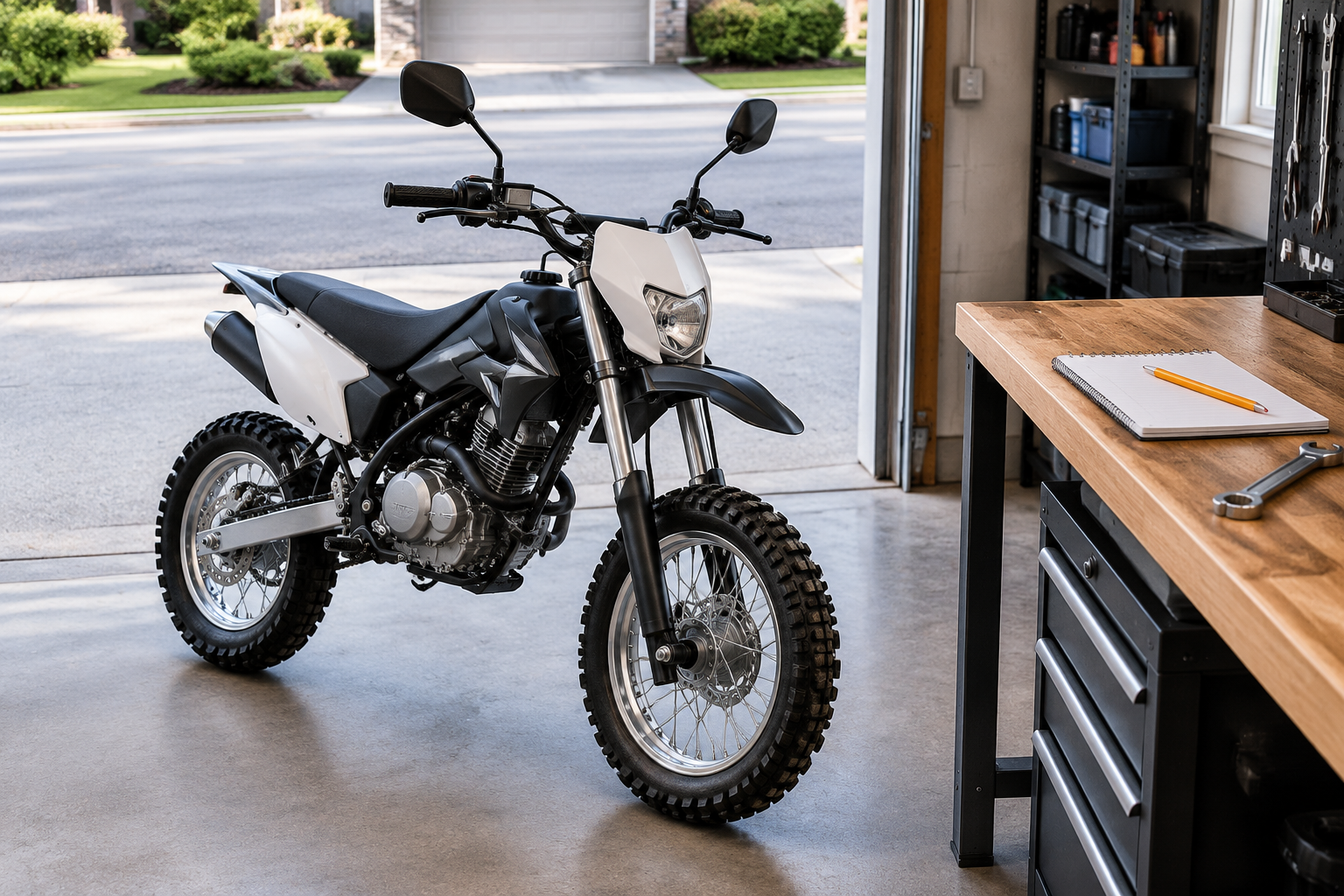
Are Pit Bikes Street Legal? State Rules Guide
TL;DR: A pit bike may be street legal only when it meets the equipment, identification, insurance, inspection, and documentation requirements that apply in the rider's state. Many pit bikes are sold for off-road use, so do not assume that lights, a horn, or a license plate can be added later to make one legal. The rules vary by state, and this guide is not legal advice.
We compare published specifications, seller information, owner feedback, and ownership considerations.
Short answer
Some pit bikes can be made street legal, but many are designed and sold for private property, trails, tracks, or other off-road areas. Whether a specific bike can legally use public roads depends on both the bike's equipment and how the state classifies it.
The product's label can also be misleading. A listing may call a model a pit bike, dirt bike, mini bike, or off-road motorcycle, while the state may use a different legal classification. Check the manufacturer's documents and your state's official motor-vehicle information before buying.
A bike's engine size, electric drive system, seat height, or appearance does not by itself establish road legality. The available information for a particular model may also fail to identify whether it is electric, gas, or another type, so confirm the powertrain and intended use with the seller.
What the law generally is
In most states, a vehicle used on public roads must satisfy the rules for its legal vehicle class. Those rules commonly concern:
- Approved lighting and signaling equipment
- Brakes and other required safety equipment
- A vehicle identification number or other accepted identification
- Ownership documents
- Title, registration, or inspection documentation where applicable
- Required insurance
- A properly licensed operator
- Equipment such as mirrors, a horn, or a muffler where required
This does not mean every pit bike can qualify. A bike sold strictly as an off-road model may lack the documentation, identification, equipment, or manufacturer certification needed for road use. Confirm the process with your state motor-vehicle agency before spending money on modifications.
The same issue applies to electric models. An electric pit bike may be regulated differently from a gas-powered model, depending on its design and the state classification. Do not assume that being quiet or having a battery makes it road legal.
For a broader comparison of intended use, see our guide to pit bikes, mini bikes, and dirt bikes for beginners.
What usually makes a bike street legal
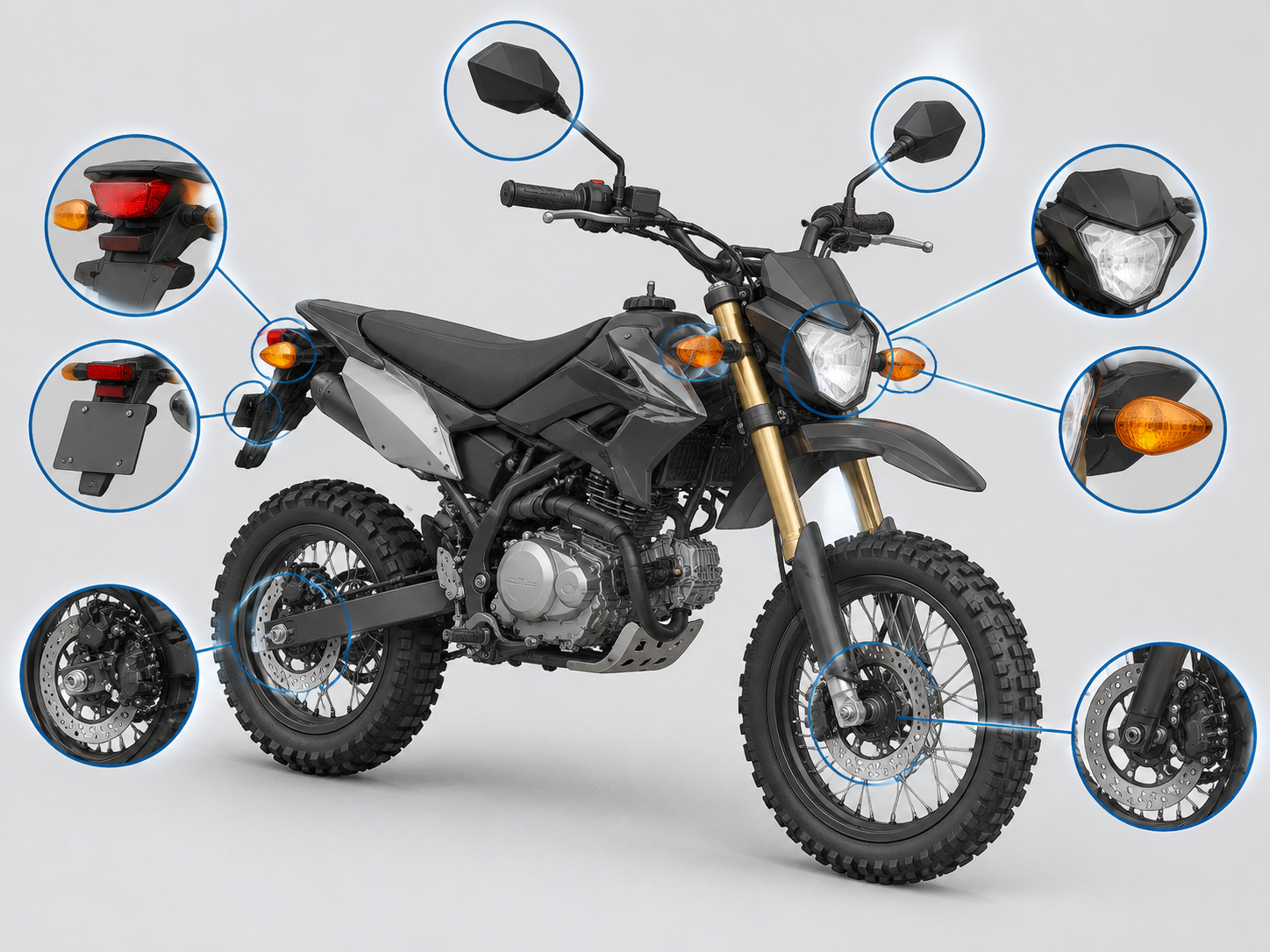
A street-legal conversion generally involves more than installing a headlight. Requirements vary by state, but buyers commonly need to verify the following.
Identification and paperwork
Ask whether the bike has an accepted vehicle identification number and whether the seller provides a manufacturer's certificate of origin, title, bill of sale, or other ownership documents. Without acceptable paperwork, registration or titling may be difficult or unavailable.
The seller should also identify whether the bike is intended for public-road use or off-road use only. A listing that does not state this clearly is a reason to contact the seller before purchase.
Required equipment
Depending on the state and vehicle classification, the bike may need equipment such as:
- Headlight and rear light
- Brake light
- Turn signals
- Horn
- Mirrors
- Front and rear brakes
- Reflectors
- A compliant exhaust or muffler for gas-powered models
- A license-plate mounting location
Adding equipment does not guarantee approval. The state may require specific component standards, an inspection, or documentation showing that the vehicle qualifies for road use.
Registration, inspection, and insurance
Some states may require a road-use application, inspection, registration, title, and insurance. The exact requirements vary by state and by vehicle category.
Do not rely only on a seller's description such as "street legal,""road ready,"or "easy to register."Ask which state approved the claim, what documents are included, and whether the statement applies to your state.
Our guide on whether pit bikes need registration covers the documentation question separately. For the legal status of a particular model, check your state's official agency rather than relying on an online listing.
Operator requirements
A street-legal pit bike may still require the rider to hold the appropriate license or endorsement. Age rules, passenger restrictions, road restrictions, and insurance requirements can also apply.
A small frame or youth-oriented design does not automatically remove those obligations. Parents should verify both the bike's classification and the rider's eligibility before allowing public-road use.
Off-road use is different
A pit bike can be suitable for private land, a designated off-road area, or a closed course without being legal on public roads. Permission from a property owner does not turn a public-road-ineligible bike into a street-legal vehicle.
Before riding off-road, confirm the site's rules. Some areas restrict noise, require permits, limit riding hours, or prohibit certain vehicle types. The pit bike safety checklist is useful for checking the machine before each ride.
A bike that is legal on private property may still lack road equipment and may not carry the same documentation as a vehicle built for public-road use. That distinction affects where you can ride and what registration path, if any, is available.
Safety gear
Legal equipment is not a substitute for protective gear. For pit bike riding, use gear appropriate to the speed, terrain, traffic exposure, and riding conditions.
At minimum, riders should consider:
- A properly fitted motorcycle helmet approved for the riding area
- Eye protection or a helmet shield
- Gloves
- Long sleeves or a riding jacket
- Long pants
- Over-the-ankle boots
- Knee and elbow protection for off-road riding
- A protective jacket and riding pants when using public roads
Road riding adds risks from traffic, hard surfaces, and limited visibility. Bright or reflective clothing can help other road users see the rider, but it does not replace required lighting or signaling equipment.
See our pit bike helmet and gear guide for a closer look at protective equipment.
FAQ
Can I ride any pit bike on the street?
No. A pit bike's name, engine size, electric powertrain, or appearance does not establish street legality. Check the bike's documents, equipment, classification, and your state's rules.
Can I make an off-road pit bike street legal?
Sometimes, but it depends on state rules and the bike's documentation. Required equipment may not be enough if the bike lacks an accepted identification number, ownership documents, or an approved path to registration.
Do electric pit bikes have different rules?
They may. The available information does not identify one universal legal category for electric pit bikes. Confirm whether the specific model is treated as an electric bicycle, motorcycle, off-road vehicle, or another class in your state.
Does a license plate prove that a pit bike is legal?
Not necessarily. A plate may not prove that the bike meets every current requirement, and rules can differ between states. Keep the vehicle documents and confirm the bike's status with the relevant state agency.
What should I ask a seller before buying?
Ask whether the bike is intended for public-road use, what identification and ownership documents are supplied, whether it has required road equipment, and whether the seller's street-legal claim applies to your state. Get the answers in writing.
External verification sources
These links are used to verify the method, named product, or jurisdiction example described above. They do not replace the exact bike manual or the rules where the rider lives.
- California DMV off-highway vehicle registration - one state-specific example; it is not a nationwide rule.
- New York DMV vehicle registration - a second state-specific registration reference.
- NHTSA motorcycle safety - federal safety information, not state registration advice.