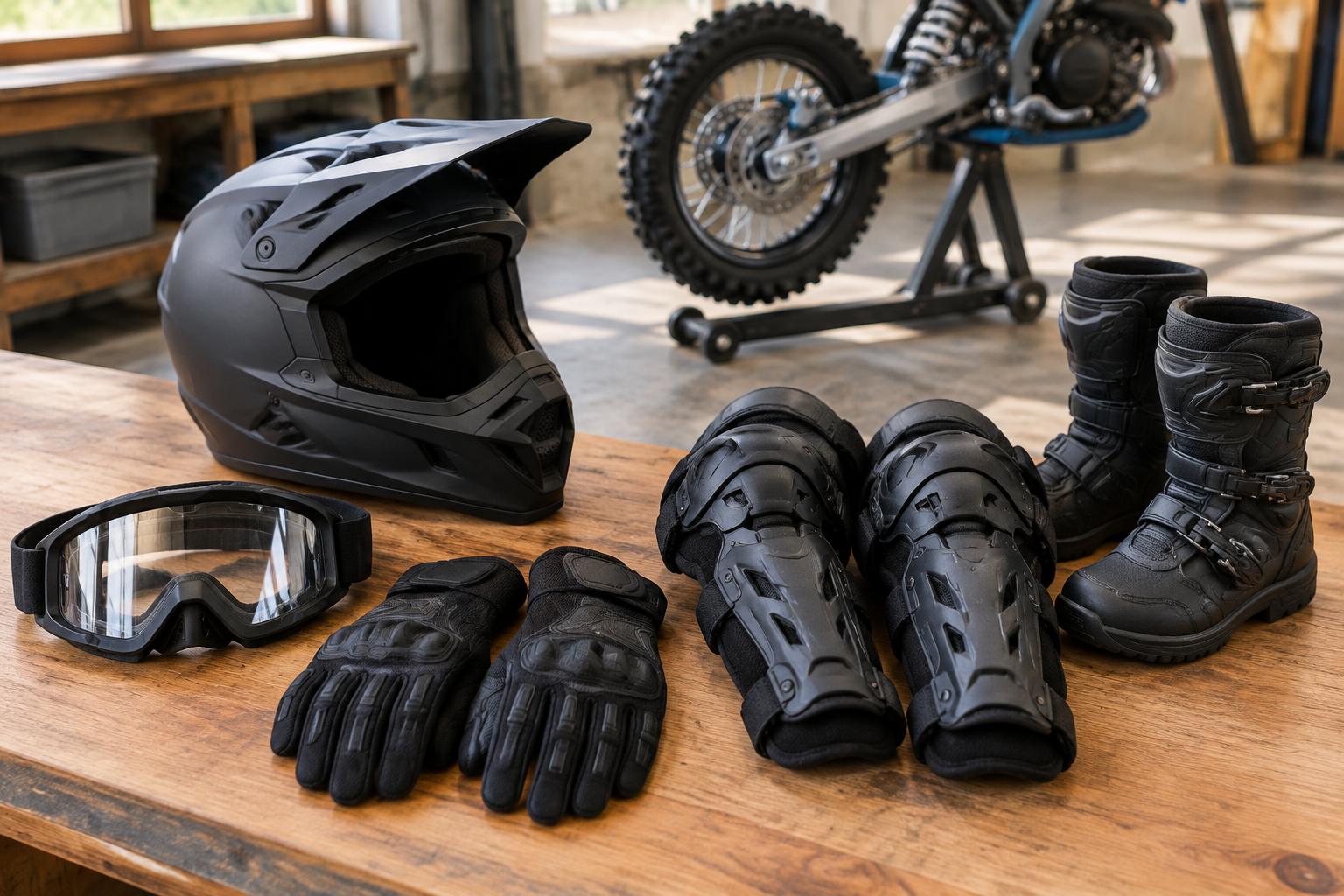
Pit Bike Helmet and Protective Gear Buying Guide
TL;DR: Choose a properly fitted, undamaged helmet with a certification label appropriate for where you ride. Add eye protection, gloves, boots, long riding pants, a protective jersey or jacket, and impact protection. Gear does not make an off-road pit bike street legal, and road-use rules vary by state. This guide is general information, not legal advice.
We compare published safety guidance, general US road-use considerations, and practical ownership concerns. We have not tested or worn the equipment discussed here.
Short Answer
A pit bike rider should start with a helmet that fits securely and is intended for the riding environment. Off-road riding also calls for eye protection, gloves, boots, long pants, and upper-body protection.
Your gear should match the consequences of a fall:
| Riding situation | Useful protection |
|---|---|
| Private property or trails | Off-road helmet, goggles, gloves, boots, riding pants, jersey, knee and elbow protection |
| Motocross or organized racing | Helmet and protective equipment accepted by the event organizer, plus goggles, boots, gloves, and impact protection |
| Low-speed practice | Helmet, eye protection, gloves, boots, long pants, and upper-body protection |
| Public-road riding where permitted | A helmet and other equipment that meet the applicable state requirements, along with road-appropriate clothing and visibility equipment |
The available information does not establish whether every pit bike is approved for public roads. Confirm the bike's category, equipment, title status, and local requirements before riding away from private property. See our guide to whether pit bikes are street legal for the related legal questions.
What the Law Generally Is
Helmet and vehicle rules vary by state, age, location, and riding environment. In most states, public-road use is treated differently from riding on private land, a designated off-road area, or a closed course.
This guide is not legal advice, and it varies by state. Check the relevant state agency and local authorities for current requirements before using a pit bike on public roads.
A helmet that is suitable for trail riding may not answer every legal question. Road use can also involve issues such as:
- Whether the vehicle is classified as an off-road motorcycle, dirt bike, mini bike, or another vehicle type
- Whether the bike has the equipment required for road travel
- Whether the vehicle can be titled, registered, or insured in that jurisdiction
- Whether the rider has the required license or endorsement
- Whether the road, trail, or property owner permits that type of vehicle
A seller listing alone may not establish street legality. Product listings can describe a bike as a pit bike or dirt bike without confirming its legal status in your state.
For age-specific buying considerations, compare the equipment and intended use described in pit bikes for kids with the guidance for pit bikes for adults.
What Usually Makes a Bike Street Legal
The exact requirements differ, but a bike generally needs more than an engine and off-road tires before it can be considered for public-road use. In most states, authorities may look at some combination of:
- A vehicle identification number or other identifying documentation
- Proof of ownership
- Title or registration eligibility
- Required lighting and reflectors
- A horn or audible warning device
- Braking equipment
- Mirrors
- A license plate location
- Road-approved tires
- Required insurance or rider credentials
Do not assume that adding lights or mirrors automatically converts a pit bike for road use. The vehicle may still lack documentation, equipment, or approval needed in your jurisdiction.
Electrical changes also deserve care. A pit bike with a battery or charging problem can lose lighting or starting functions, so review Pit Bike Battery Not Charging before relying on an electric system for road equipment.
Choosing a Helmet
Fit Comes First
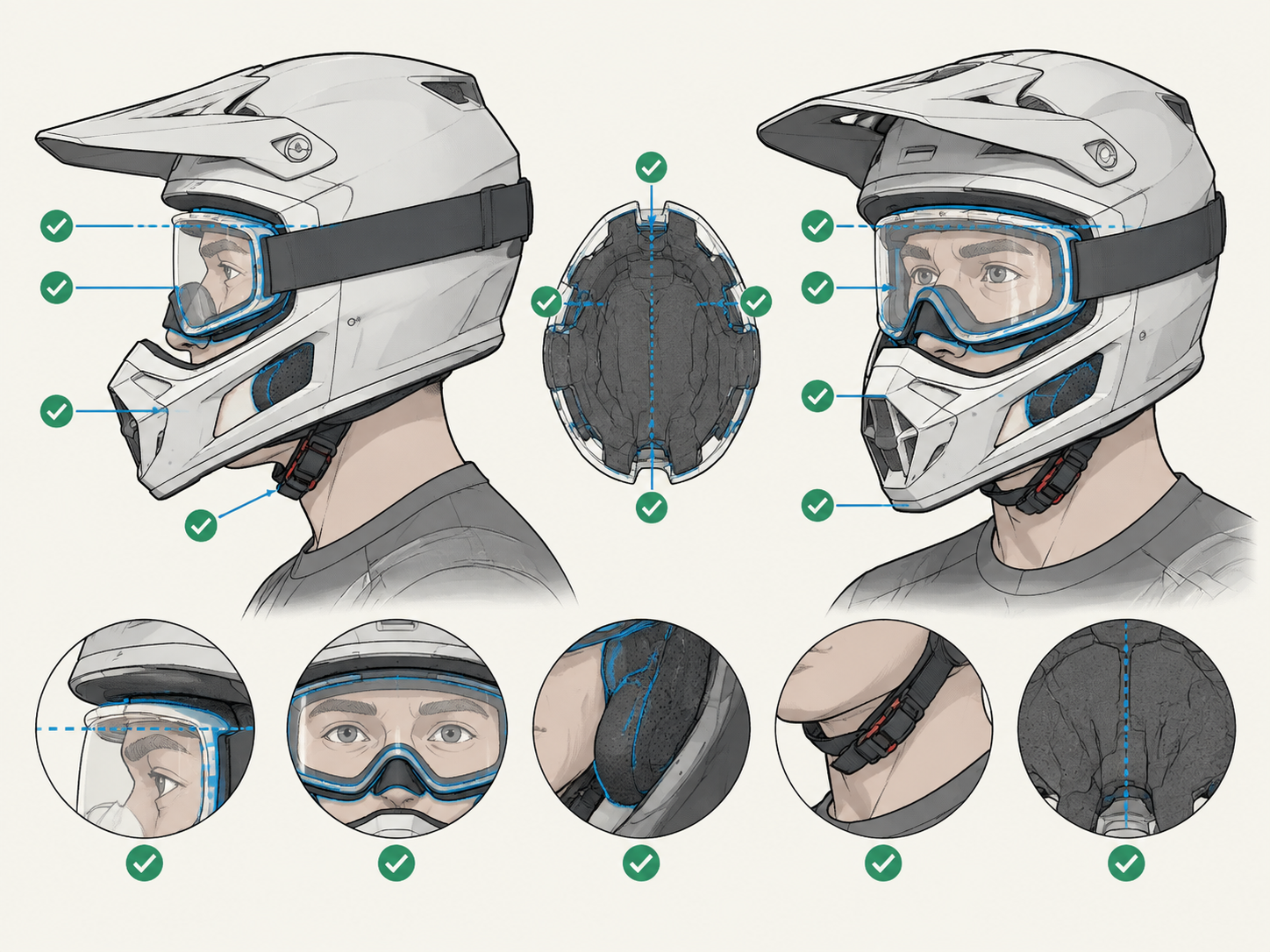
A helmet should sit level on the head, cover the intended areas, and remain stable when you move your head. It should feel secure without creating pressure points that would make you remove it during a ride.
Check these points:
- The helmet does not shift substantially when you move it by hand.
- The retention strap stays secured beneath the chin.
- The field of view is clear when you look ahead and to each side.
- The shell and liner have no visible damage.
- The helmet is compatible with the goggles or eye protection you plan to use.
A helmet that is loose, damaged, or difficult to keep fastened is a poor safety purchase even if it has the correct label.
Helmet Types
Off-road helmet: Usually shaped to accommodate goggles and provide ventilation. It is suited to trail, track, and private-property riding when the model's certification and the event rules are appropriate.
Full-face street helmet: Covers the face and is designed for road-oriented use. It may be a better fit for permitted public-road riding, subject to the applicable state rules.
Modular or open-face helmet: These designs have different coverage and protection characteristics. Confirm that the model is intended for your riding environment and meets the requirements that apply where you ride.
Do not buy a used helmet if you cannot verify its history. A helmet can have internal damage that is not obvious from its exterior.
Eye and Face Protection
Goggles help shield the eyes from dust, mud, branches, and debris during off-road riding. Regular sunglasses do not provide the same coverage or retention.
Look for eye protection that:
- Fits the helmet opening without leaving large gaps
- Stays in place during head movement
- Allows clear vision in the expected lighting
- Works with prescription eyewear if needed
- Uses a lens appropriate for dust, glare, or changing light
A face shield can be useful for road-oriented riding, but it should remain clear and free from scratches that interfere with vision.
Gloves, Boots, and Clothing
Gloves
Gloves protect the hands from abrasion and help maintain control in changing conditions. Choose a pair with a secure wrist closure, appropriate palm coverage, and enough flexibility to operate the controls.
Thin casual gloves may provide less protection during a slide. That matters most when riding on hard ground or near obstacles.
Boots
Motorcycle or motocross boots provide more structure than ordinary shoes. They should cover the ankle and remain secured while riding.
Boots are particularly important around the foot controls, chain, pegs, and hot engine or exhaust components. Avoid riding in sandals, loose footwear, or shoes that can come off during a fall.
Pants and Upper-Body Protection
Wear long riding pants rather than shorts. Off-road pants are designed for movement and can work with knee protection.
For the upper body, consider:
- A chest protector
- Shoulder and elbow protection
- A protective jacket for road use
- A riding jersey over separate impact protection
- A back protector where appropriate
A jersey by itself may improve comfort but should not be treated as impact protection unless the garment is specifically designed and labeled for that purpose.
Knee, Elbow, Chest, and Back Protection
Impact protection should remain positioned over the body area it is meant to cover. Straps that loosen, armor that shifts, or protectors that do not fit the rider can reduce their usefulness.
For trail and track riding, knee protection can be especially relevant because a fall may involve rocks, ruts, pegs, or other hard surfaces. Choose protection that permits normal control movement without catching on the bike.
For children and smaller riders, fit is more important than buying oversized adult gear for future use. Loose equipment can move out of position during a crash.
Gear for Kids
A child should use equipment sized for the child, including the helmet. Adult gear that is too large can interfere with vision, movement, and retention.
Before a child rides, check:
- Helmet fit and strap position
- Clear vision through the goggles or face shield
- Gloves that do not interfere with the controls
- Boots that cover and support the ankles
- Knee and elbow protection that stays in place
- Clothing that does not hang near the chain, wheel, or exhaust
Pair the gear with a bike and riding area appropriate for the child's size and experience. Our beginner off-road bike guide compares pit bikes, mini bikes, and dirt bikes by intended use rather than treating them as the same category.
Pre-Ride Gear Check
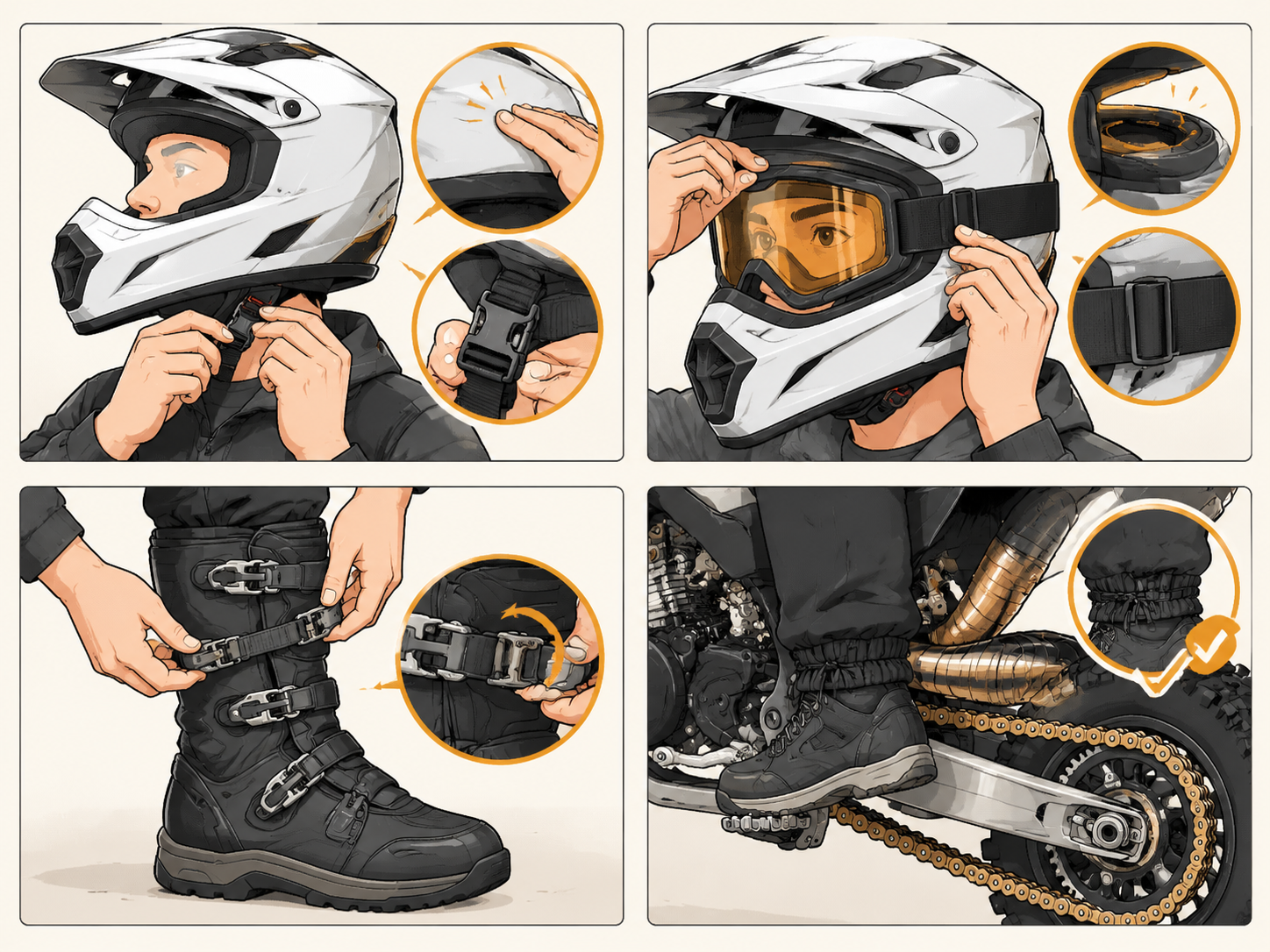
Use this short check before every ride:
- Inspect the helmet shell, liner, visor, and retention strap.
- Confirm that the helmet and goggles do not obstruct vision.
- Fasten gloves, boots, knee protection, and elbow protection.
- Check that straps and closures do not hang near moving parts.
- Remove damaged or heavily worn protective equipment from service.
- Match the gear to the surface, speed, weather, and riding area.
- Confirm that the bike itself is ready, including brakes, controls, tires, and chain.
The bike's condition affects safety as much as the rider's clothing. A brake problem should be addressed before riding; see Pit Bike Brake Adjustment for a related maintenance guide.
Common Gear Mistakes
Buying by Appearance Instead of Fit
A helmet or protector that looks suitable may still move during riding. Fit and retention should decide the purchase.
Treating a Bicycle Helmet as a Motorcycle Helmet
Bicycle helmets are designed for a different use. Use equipment intended for motorcycle or off-road riding and verify the labeling.
Using Casual Shoes
Ordinary shoes leave the ankles and feet more exposed around the foot controls and engine. Motorcycle boots provide more coverage and support.
Assuming Gear Solves Legal Problems
Protective equipment can reduce injury risk, but it does not provide registration, road approval, insurance, or permission to ride in a particular location.
Continuing to Use Damaged Equipment
A helmet or protector involved in a significant impact may need replacement even when damage is not obvious. Follow the product maker's replacement and inspection guidance.
Legal and location check
This is general safety information, not legal advice. Helmet, eye-protection, vehicle, and riding-location requirements vary by state and can also differ on private land, public roads, and managed trail systems. Check your state DMV or motor vehicle agency and the local land manager before riding; protective gear does not make an off-road bike street legal.
Evidence and sources
- NHTSA: Choose the Right Motorcycle Helmet explains helmet fit, DOT labeling, FMVSS No. 218, and the difference between common helmet styles.
- NHTSA motorcycle safety guidance recommends a DOT-compliant helmet, coverage for arms and legs, over-the-ankle footwear, gloves, and visible clothing.
- The MSF T-CLOCS checklist covers the machine inspection that protective equipment cannot replace.
DOT labeling is manufacturer self-certification, not an individual NHTSA approval of each helmet. Verify the complete label and fit rather than relying on a marketplace title or a loose sticker.
FAQ
Do I need a helmet to ride a pit bike?
Helmet rules depend on the state, property, riding area, and rider circumstances. Regardless of the legal rule, a properly fitted motorcycle or off-road helmet is a basic safety recommendation for pit bike riding.
Is a motocross helmet suitable for street riding?
It may be suitable for some riding conditions, but the answer depends on the helmet's certification, design, and the rules where you ride. Confirm the requirements before using it on public roads.
Are goggles better than a face shield?
They serve different purposes. Goggles are commonly used for off-road dust and debris, while a face shield is more common for road-oriented riding. Choose the option that provides clear vision and fits securely with the helmet.
Can I ride in work boots?
Work boots may cover the ankle, but they may not provide the structure, protection, or control feel of motorcycle or motocross boots. Motorcycle-specific boots are the safer equipment choice for regular riding.
Does wearing protective gear make a pit bike street legal?
No. Gear does not establish the bike's vehicle classification, documentation, equipment, registration status, or permission to ride on a public road. Those issues vary by state and location.