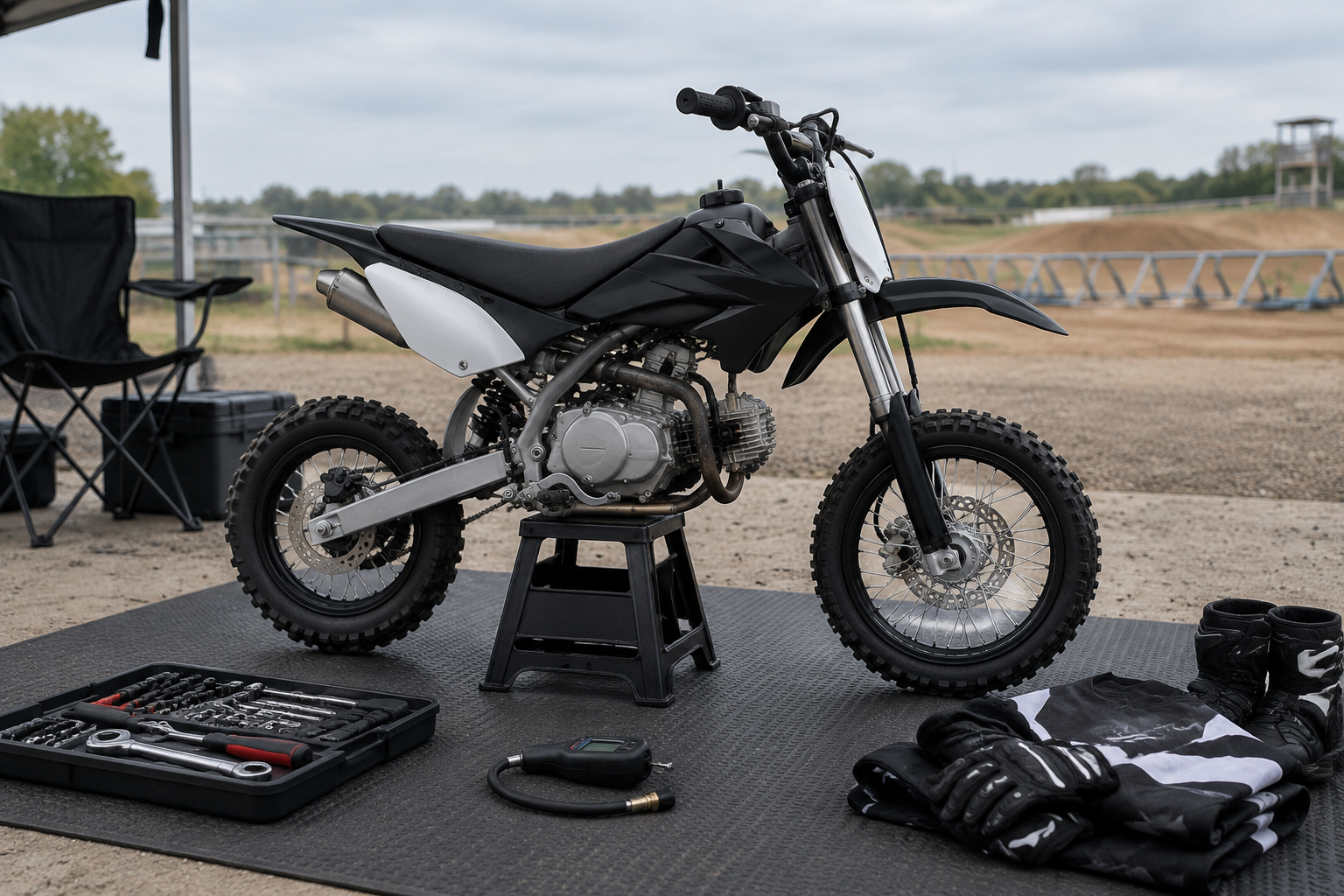
Pit Bike Racing: How to Get Started
The short answer: Find a local track or organizer before buying or modifying a bike. Get the current class rules, then confirm engine, wheel, frame, transmission, noise, safety-wire, age, protective-equipment, and membership requirements in writing. Practice starts, braking, cornering, passing, and flag rules in a permitted setting before entering an event.
Pit bike racing is not one universal class. A bike accepted by one organizer may be ineligible or placed in a different class somewhere else.
1. Find a Real Event
Search for pit bike, mini moto, mini motocross, or small-bore racing near your location. Check track calendars, motorcycle clubs, sanctioning organizations, and organizer social pages, then confirm that the event is current.
Ask whether beginners can enter, whether practice sessions are available, and who answers technical-rule questions. A seller calling a machine “race ready” does not establish eligibility.
2. Get the Current Rulebook
Read the exact rules for the event and season you plan to enter. Record the class name and revision date rather than relying on an old forum post or another track's rules.
Rules can cover:
- Engine type and displacement
- Four-stroke or two-stroke classes
- Wheel diameter and tire type
- Frame and swingarm requirements
- Automatic, semi-automatic, or manual transmission
- Carburetor, intake, exhaust, and noise limits
- Electric-bike power, battery, and isolation requirements
- Kill switch, safety wire, catch cans, guards, and number plates
- Rider age, experience, membership, licensing, and supervision
- Required helmet, boots, gloves, eye protection, and body protection
Ask the organizer about anything the rulebook does not settle. Save the answer with your entry information.
3. Confirm Rider Eligibility and Fit
Check age, experience, licensing, guardian, waiver, and membership requirements. For a child or teen, confirm adult supervision and whether the class uses age, ability, bike specification, or a combination.
The rider must reach and operate the throttle, brakes, shifter, clutch where fitted, kill switch, and ground as required for safe control. Seller age labels and engine size do not replace a fit check.
4. Confirm the Bike Before Spending on Upgrades
Send the organizer the exact make, model, year, engine, wheel sizes, transmission, frame, and current modifications. Ask which class it enters and what must change before technical inspection.
Do this before buying an exhaust, engine, carburetor, wheel set, or suspension parts. A modification can move the bike out of a beginner or stock class.
The pit bike versus dirt bike comparison explains why category names are not interchangeable. Use the parts compatibility guide before ordering any required component.
5. Prepare the Bike
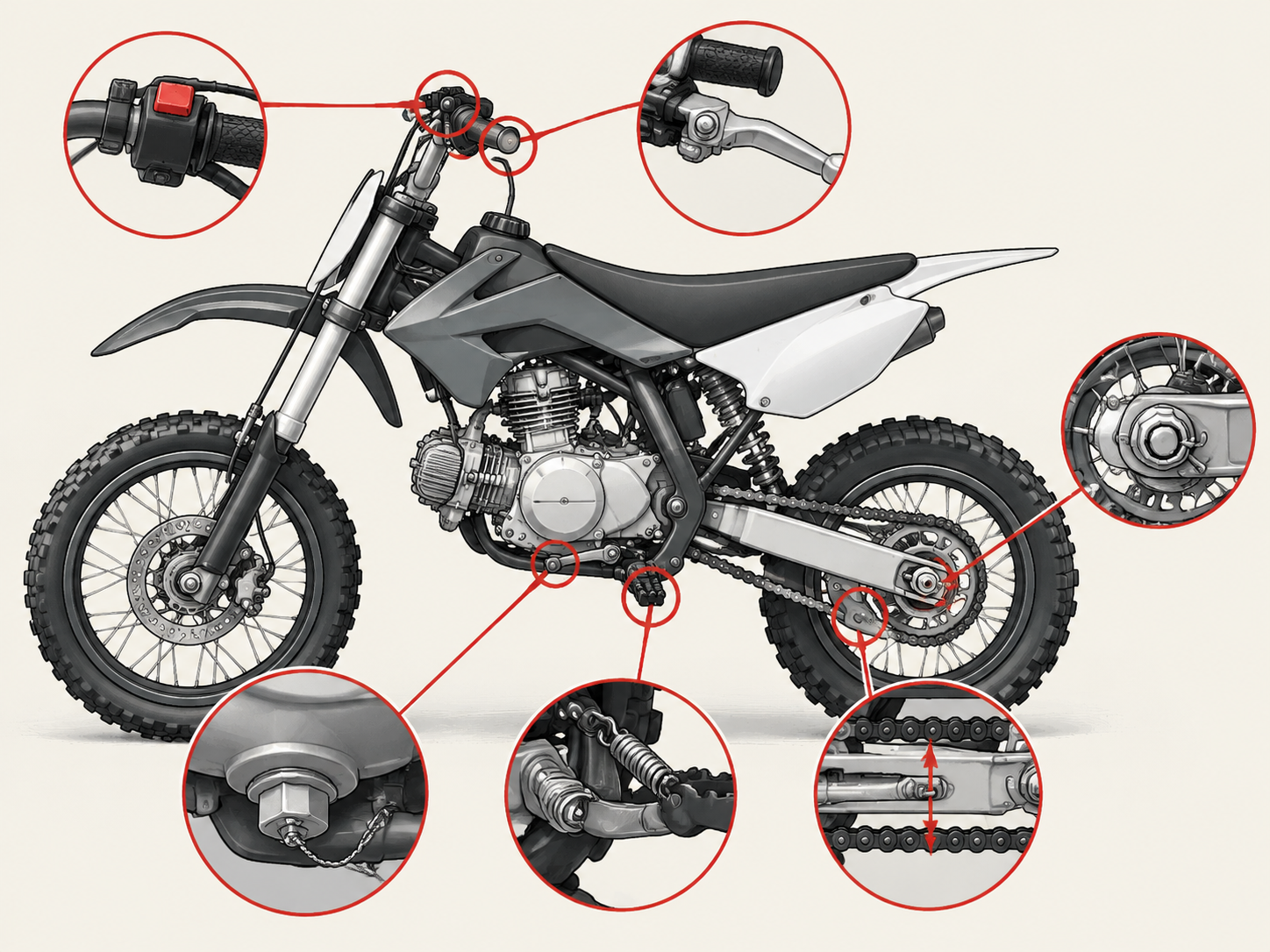
Follow the event checklist and exact service manual. Common preparation areas include:
- Throttle return and kill-switch operation
- Front and rear braking
- Tire condition and permitted tire type
- Wheel, spoke, axle, and bearing condition
- Chain condition, slack, alignment, and guards
- Fluid, fuel, coolant, and battery security
- Foot pegs, controls, bars, grips, and levers
- Frame, swingarm, forks, shock, and mounting hardware
- Exhaust security and noise compliance
- Number plates, transponder, and required safety wire
Do not guess torque values or safety-wire locations. Use the rulebook, technical-inspection instructions, and model manual.
6. Budget for the Whole Event
The bike is only one cost. Ask about entry fees, practice fees, membership, transponder rental, pit access, fuel or charging, transport, tires, tubes, chains, brake parts, oil, filters, repairs, and protective equipment.
Carry the tools and spares allowed by the organizer, but do not buy random upgrade parts before identifying likely wear items. The parts and upgrade guide prioritizes maintenance and fit over universal product recommendations.
7. Practice the Skills the Event Uses
Practice in a permitted area with suitable supervision. Work on smooth starts, throttle control, braking before corners, line choice, standing position, predictable passing, and looking ahead.
Learn the organizer's flag meanings, staging process, start procedure, pit direction, and incident rules. Speed without predictable control is not race readiness.
8. Prepare for Race Day
Confirm registration time, rider briefing, technical inspection, practice schedule, class order, gate or grid procedure, and required documents. Arrive with enough time to fix a small inspection issue without rushing.
Before the first session:
- Complete the pit bike safety checklist
- Verify controls and brakes after unloading
- Check fuel or battery state
- Confirm tire pressure to the bike, tire, surface, and team guidance
- Inspect chain and axle security
- Fasten all protective gear
- Attend the rider meeting
Recheck the bike after each session for leaks, loose hardware, chain change, tire damage, brake feel, and crash damage.
Choosing a First Race Bike
Start with organizer eligibility, rider fit, predictable controls, parts support, and service information. Do not choose from top speed or rating alone.
The current PitBikeHQ model records contain seller-listed specifications and marketplace snapshots, but they do not establish acceptance by any race class. Use Best Pit Bikes only to build a shortlist, then confirm each candidate with the organizer and seller.
Safety and Limits
Racing increases speed, proximity to other riders, repeated loads, and consequences of a mechanical fault. Use equipment required by the organizer and replace damaged protective gear according to its maker.
This guide does not certify a rider, bike, track, or event. The organizer, rulebook, technical inspector, manufacturer, and qualified mechanic control their respective decisions.
FAQ
Do I need a special license to race a pit bike?
Requirements vary by organizer and sanctioning body. Ask about membership, competition credentials, waivers, guardian consent, and age rules before entering.
What engine size should a beginner race?
Use the classes offered locally and choose a bike the rider fits and controls confidently. Engine size alone does not establish class eligibility or beginner suitability.
Can I race an electric dirt bike in a pit bike class?
Only if the organizer has a class and rules that accept it. Confirm motor, battery, isolation, weight, charging, and safety requirements before buying.
Should I modify the bike before my first race?
Not until the organizer confirms the class and inspection requirements. Reliability, controls, brakes, tires, rider fit, and legal sound compliance usually matter before extra power.
Evidence and Sources
- The AMA racing rulebook page provides current competition-rule resources for AMA-sanctioned activity.
- The AMA motocross starting guide outlines organizer contact, membership, bike, gear, practice, and event preparation for motocross.
Local pit bike events can use different rules. Confirm the current class and organizer requirements directly.