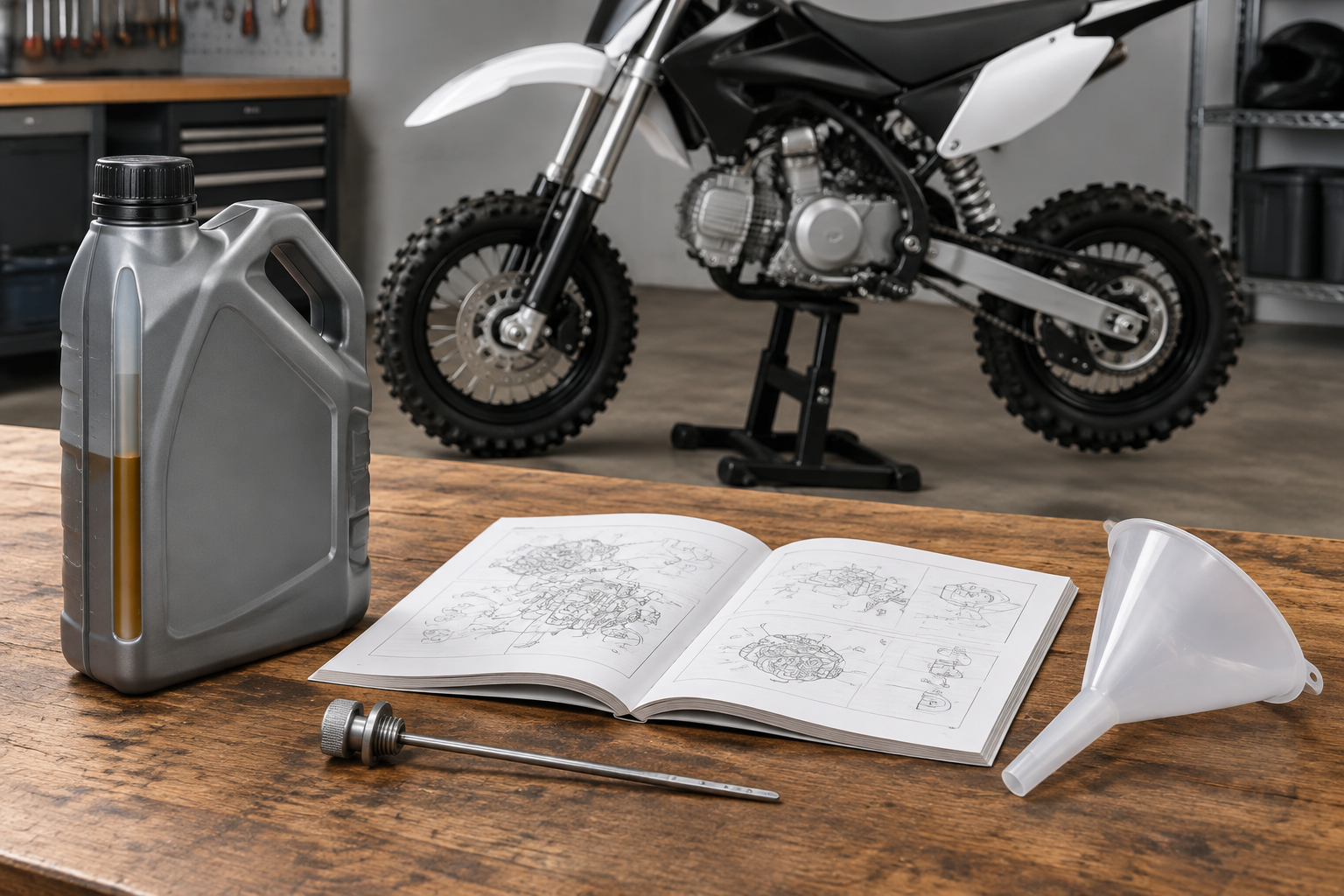
Pit Bike Oil Type: Compatibility Guide Before You Buy
The short answer: Buy oil by the exact engine manual, not by a generic 110cc or 125cc label. Confirm the viscosity range for expected temperature, required performance specification, wet-clutch compatibility, change quantity, level-check method, and whether the engine has a filter or screen. Do not assume automotive oil or another pit bike's capacity is suitable.
The Oil Compatibility Rule
The same engine size can appear in different engine families with different oil quantities, checking procedures, service intervals, and clutch designs. Engine displacement narrows the search but does not confirm the oil.
Use the manufacturer or engine manual as the deciding source. If the bike has an aftermarket engine, identify the engine maker, model code, and manual rather than relying on the frame brand.
What to Confirm on the Label
| Item | Why it matters |
|---|---|
| Viscosity grade | Must suit the manual and expected ambient-temperature range |
| Motorcycle performance specification | Confirms the oil meets the standard required by the engine maker |
| Wet-clutch compatibility | Friction modifiers can affect a shared engine and clutch oil system |
| Oil type | Mineral, semi-synthetic, or synthetic use must follow the manual and service condition |
| Container size | Must cover the specified service quantity without encouraging overfill |
| Product authenticity and seal | Reduces the risk of counterfeit or contaminated oil |
Do not choose oil from viscosity alone. Two containers with the same viscosity can have different friction and performance specifications.
Wet Clutch or Separate Gearbox?
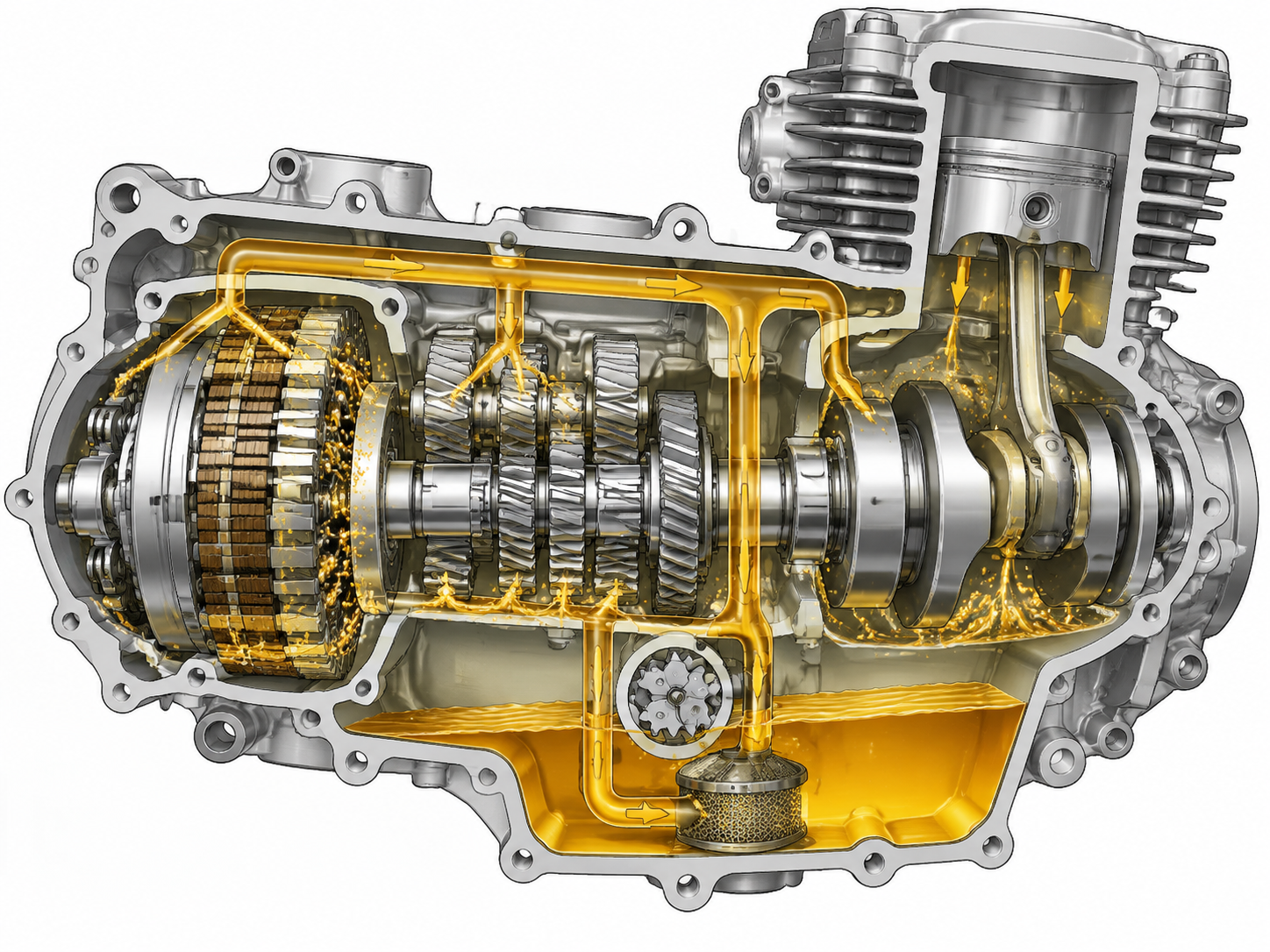
Many small four-stroke pit bike engines use one oil supply for the engine, transmission, and wet clutch. Those engines need oil compatible with the clutch requirements in the manual.
Other designs can use different lubrication arrangements. Confirm whether the clutch and transmission share engine oil before applying wet-clutch advice.
Viscosity Depends on the Manual and Temperature
A viscosity recommendation often changes with ambient temperature. Use the chart in the exact manual for the climate and riding conditions rather than copying a grade from another owner.
Cold starting, sustained high temperature, engine wear, and racing use can affect the manufacturer's guidance. Do not select a thicker or thinner oil as a repair for low pressure, noise, overheating, or clutch trouble without diagnosis.
Capacity Is Not Universal
Oil-change quantity can differ from dry-engine capacity, and a filter or screen service can change the amount required. Fill gradually and use the model-specific dipstick or sight-window procedure.
The manual also determines whether the dipstick is screwed in or rested on the threads, how upright the bike must be, and how long to wait before checking. Overfilling and underfilling can both cause problems.
Before Buying Oil
- Record the bike and engine model.
- Find the exact engine or owner manual.
- Note the viscosity chart and required specification.
- Confirm whether the clutch shares the engine oil.
- Record the oil-change quantity and dry capacity separately.
- Check whether a filter, centrifugal filter, or screen must be serviced.
- Confirm the change interval and severe-use guidance.
- Buy from a source where the product, seal, and specification can be checked.
If any item is unknown, ask the engine supplier or a qualified technician before filling. The oil-change guide explains the service sequence after the correct oil is identified.
Common Buying Mistakes
Choosing by Engine Size Alone
Two engines labeled 125cc can use different cases, clutches, filters, and capacities. Match the engine model, not only displacement.
Assuming Car Oil Is Equivalent
An automotive oil may not meet the motorcycle or wet-clutch requirement. Compare the complete label with the manual.
Using a Universal Capacity
Do not pour in a quantity copied from a forum, seller listing, or different engine. Use the specified checking method and stop at the correct level.
Treating Oil as a Mechanical Repair
Oil choice does not repair worn clutch plates, low compression, blocked cooling, damaged bearings, or incorrect valve clearance. Diagnose the symptom before changing viscosity.
FAQ
What oil does a 110cc pit bike take?
There is no universal answer based on 110cc alone. Identify the engine model and follow its viscosity, performance, clutch, and capacity requirements.
Can I use synthetic oil?
Use it only when the manual permits the oil type and the product meets every required specification. Synthetic does not override wet-clutch or viscosity requirements.
How much oil should I buy?
Check the oil-change quantity, filter or screen procedure, and dry capacity in the exact manual. Buy enough for the service without using the container size as the fill amount.
Why does the clutch slip after an oil change?
Possible causes include an incompatible oil, incorrect level, existing clutch wear, or an adjustment fault. Stop riding and check the oil label, level, clutch adjustment, and service manual.
Can an electric pit bike use this guide?
No. Electric drivetrains use different lubricants and service procedures where applicable. Follow the motor, reduction-drive, and manufacturer documentation.
Evidence and Sources
- Use the Honda Powersports owner-manual library for exact-model viscosity, capacity, checking, and service guidance on supported Honda models.
- The Yamaha TT-R110E owner manual is an official example showing model-specific viscosity, capacity, and level-check instructions.
Oil grade, performance specification, clutch requirement, capacity, checking method, and interval are engine-specific.