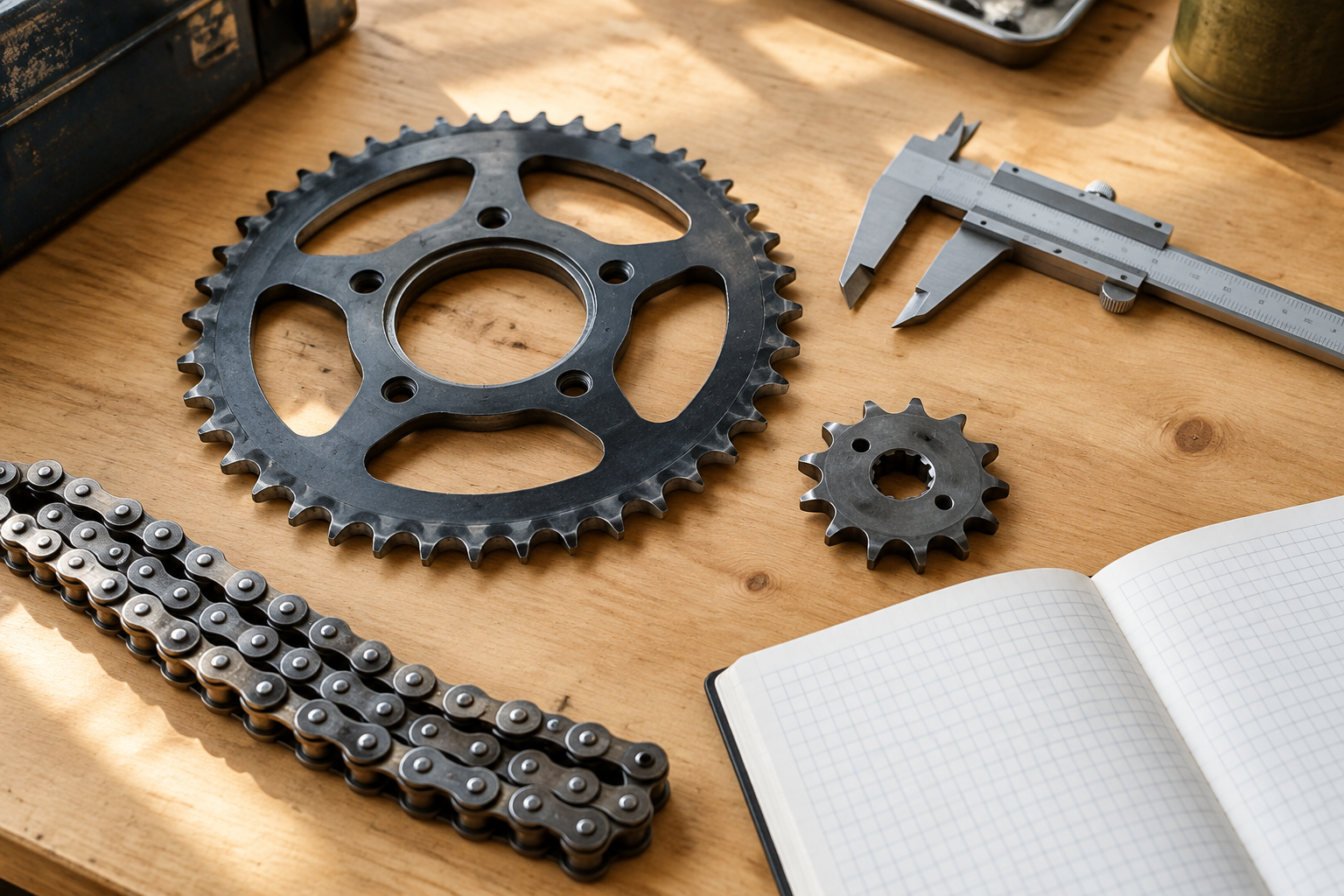
Pit Bike Sprocket Guide: Fitment Before Buying
TL;DR: Do not buy a pit bike sprocket by model name or engine displacement alone. Confirm the chain size, tooth count, center bore, bolt-circle diameter, mounting holes, offset, and the seller's fitment list before ordering. Common sizes narrow the search but do not prove fitment.
Prices and ratings checked in August 2026.
We compare published specifications, seller information, owner feedback, and ownership considerations.
The supplied product name is only "Pit," with no manufacturer, seller, engine information, wheel size, or part numbers. Seller category not confirmed. That means this guide cannot identify a guaranteed replacement part for a particular bike.
The compatibility rule
Confirm compatibility by part number, dimensions, or the seller's fitment list, never by model name alone.
A listing that says a part fits a pit bike may still be wrong for yours. Pit bikes can use different chain pitches, sprocket bolt patterns, wheel diameters, brake mounts, carburetor sizes, electrical connectors, and engine cases.
Before ordering, compare:
- The original part number, if present
- Mounting-hole count, spacing, and bolt diameter
- Connector shape, pin count, and wire colors for electrical parts
- Shaft, bore, axle, or hose dimensions
- The replacement seller's explicit fitment information
The main trade-off is convenience versus certainty. A generic listing may be easier to find, but a part without matching dimensions or an explicit fitment list can create an unusable purchase.
Common sizes and how to confirm them
The following are common pit bike references, not universal specifications. Confirm against your existing part or manual before buying.
| Part area | Common pit bike references | What to confirm |
|---|---|---|
| Drive chain | 420 and 428 chain | Chain pitch, width, master-link type, and sprocket compatibility |
| Wheels and tires | 10-inch, 12-inch, 14-inch, and 17-inch wheel references | Tire sidewall size, rim diameter, axle diameter, hub width, and brake fitment |
| Sprockets | Front and rear sprockets made for 420 or 428 chain | Chain pitch, spline or mounting pattern, bolt-hole spacing, and offset |
| Spark plug | Varies by engine and cylinder head | Existing plug code, thread diameter, reach, and heat range |
| Carburetor | Varies by engine, intake, throttle cable, and air-filter connection | Intake-side diameter, air-filter-side diameter, cable end, choke arrangement, and mounting angle |
| Brake parts | Mechanical and hydraulic systems both appear on pit bikes | Rotor diameter, caliper mount, hose fitting, pad shape, and lever/master-cylinder type |
A 420 chain is not automatically compatible with every pit bike using a small engine, and a 428 chain is not automatically an upgrade. The chain, front sprocket, and rear sprocket need matching pitch. See the pit bike chain size guide before selecting drivetrain parts.
Wheel labels alone also do not establish fitment. A tire may match the rim diameter while still being unsuitable because its width, axle arrangement, hub, or brake setup differs. Use the pit bike tire sizes guide to check the full tire marking rather than ordering from a wheel-size description.
Parts worth considering
No optional related parts were supplied for this product. These are part categories worth inspecting when maintaining a pit bike, provided the measurements and fitment information match your machine.
Chain and sprockets: Replace as a matched system when the pitch or tooth profile does not match. A mismatched chain and sprocket can prevent correct installation or accelerate wear. The pit bike sprocket guide explains the checks needed before choosing either sprocket.
Brake pads and rotors: Match pad shape and caliper design first, then verify rotor diameter and mounting. Ordering by wheel size alone may leave you with pads that do not seat in the caliper.
Air filter: Confirm the carburetor inlet outside diameter and available clearance. A filter can have the right clamp style but still interfere with the frame or bodywork.
Controls and cables: Measure cable housing length, inner-wire travel, lever-end fitting, and carburetor-end fitting. A cable that is close in length may route poorly or fail to provide full throttle or clutch travel.
Electrical parts: Match connector body, pin count, wire arrangement, mounting points, and electrical specifications. Do not assume a CDI, coil, regulator, battery, or stator fits from engine displacement or a marketplace title.
For a broader replacement and upgrade checklist, consult Pit Bike Parts & Upgrades: What to Buy First. The key buying decision remains the same: select parts from confirmed dimensions and documented fitment, rather than a general pit bike label.
How to measure or confirm before buying
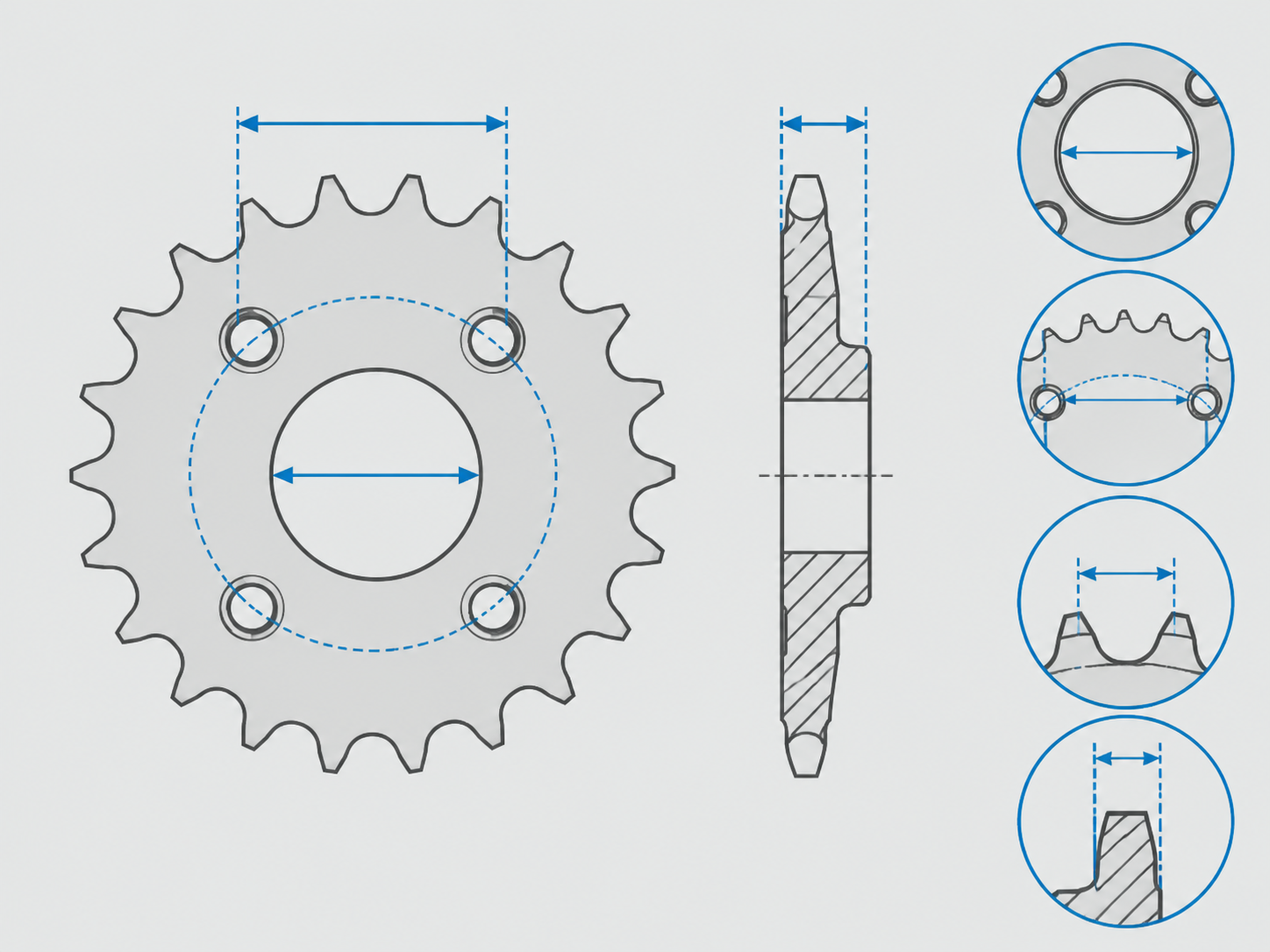
Use the old part as the reference whenever possible.
- Chain: Find the pitch marking on the chain or identify the current sprocket and chain specification. Confirm whether the bike uses 420 or 428 only after checking the installed components.
- Sprocket: Count mounting holes, measure their spacing, inspect the center bore, and verify chain pitch. Compare the offset of the old sprocket with the proposed replacement.
- Tire: Read the full tire marking from the sidewall. Confirm against the rim, clearance at the fork or swingarm, and the owner's manual where available.
- Brake pad: Remove the pad and compare its outline, retaining-pin location, tab shape, and thickness with the seller's diagram.
- Cable: Measure the complete outer housing and exposed inner-wire travel. Photograph both end fittings beside a ruler before contacting a seller.
- Electrical component: Photograph every connector, count pins, note wire colors, and compare mounting tabs and fastener locations.
Ask the seller a direct question before ordering: Does this part fit the existing part number and the measurements supplied? Keep the seller's response and the listing images. This matters when a listing uses broad terms such as "pit bike," "dirt bike," or "mini bike" without a detailed fitment list.
FAQ
Can I buy a part just because it says it fits a pit bike?
No. "Pit bike" describes a broad group of motorcycles and does not establish a single parts standard. Confirm by part number, dimensions, or the seller's fitment list.
Are 420 and 428 chains interchangeable?
Do not assume they are interchangeable. Confirm the chain pitch on the installed chain and both sprockets. A chain and sprocket set must use the same pitch.
Does engine displacement confirm parts fitment?
No. Engine displacement does not confirm chain size, wheel fitment, brake mounts, electrical connectors, carburetor dimensions, or bodywork mounting points. For engine-related questions, see Which Parts Fit a 110cc Pit Bike, while still verifying your own part dimensions.
How do I confirm an electrical replacement part?
Match the original part number where possible, then compare connector type, pin count, wire colors, mounting locations, and seller fitment information. If the bike has a starting or charging fault, review Pit Bike Battery Not Charging before replacing components.
What should I do if the seller does not list dimensions?
Ask for a technical drawing, part number, connector image, or confirmed fitment list. If the seller cannot provide one, compatibility remains unverified and the buying risk is higher.
Sources and evidence notes
- JT Sprockets application guide shows that sprocket part number, tooth count, chain pitch, and chain length are model-and-year-specific.
- JT Drive Chain range says to follow the vehicle manufacturer's recommendation rather than treating displacement charts as final fitment.
- MSF T-CLOCS checklist includes sprocket condition, chain tension, fasteners, and wheel checks.
These sources support the fitment process but do not independently verify a sprocket for the unidentified product record used by this guide.