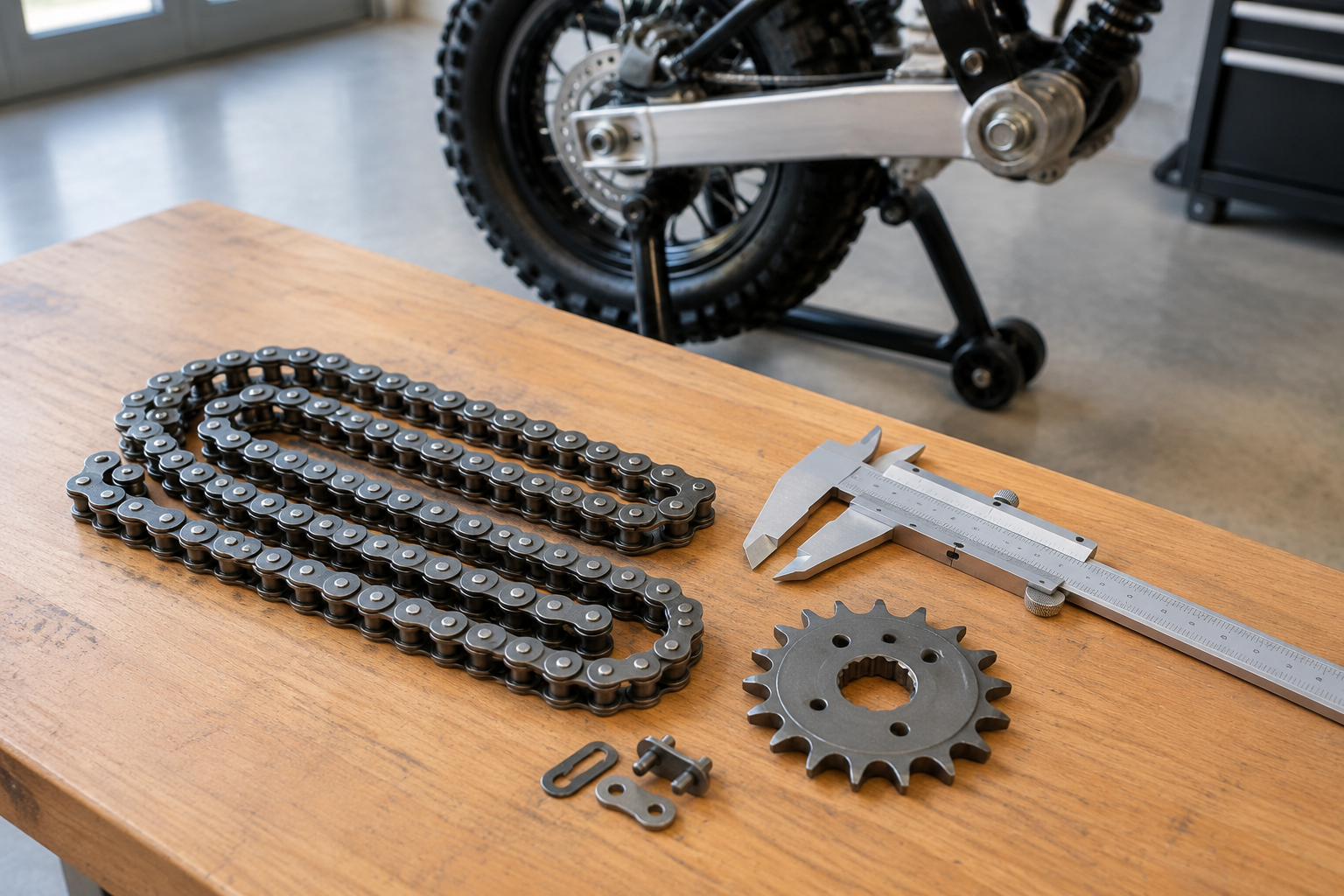
Pit Bike Chain Size: Compatibility Guide Before Buying
The short answer: Do not buy a chain because a listing says it fits a pit bike. Match the installed chain marking, pitch, width, link count, master-link type, and both sprockets before ordering. No product-specific chain specifications or fitment information were supplied for this guide.
Prices and ratings checked in August 2026. No prices or ratings were supplied for this guide.
A pit bike category label does not identify one chain specification. It also does not establish whether a product is a pit bike, dirt bike, mini bike, pocket bike, electric dirt bike, or another type. Confirm the chain installed on the vehicle rather than relying on a broad model or category name.
Even two bikes marketed as 110cc can use different chains, sprockets, link counts, offsets, or wheel-adjustment ranges. Engine displacement is not a fitment specification.
The Compatibility Rule
Confirm a replacement chain by part number, chain marking, measured dimensions, or the seller's published fitment list. Do not confirm fitment by model name alone.
A chain that appears similar can have a different pitch, width, link count, or master-link design. It can also be incompatible with the installed sprockets.
Use this evidence in order:
- Match the original chain marking or part number where available.
- Compare the replacement listing's pitch, width, link count, and master-link details with the removed chain.
- Confirm that the replacement chain matches both the front and rear sprockets.
- Check the seller's published fitment list against the exact vehicle information.
- Request written confirmation from the seller when the listing does not provide the required measurements or compatibility details.
The buying risk is straightforward: an incorrect chain may not engage the sprockets correctly, may not have the required length, or may not install safely.
Common Sizes and How to Confirm Them
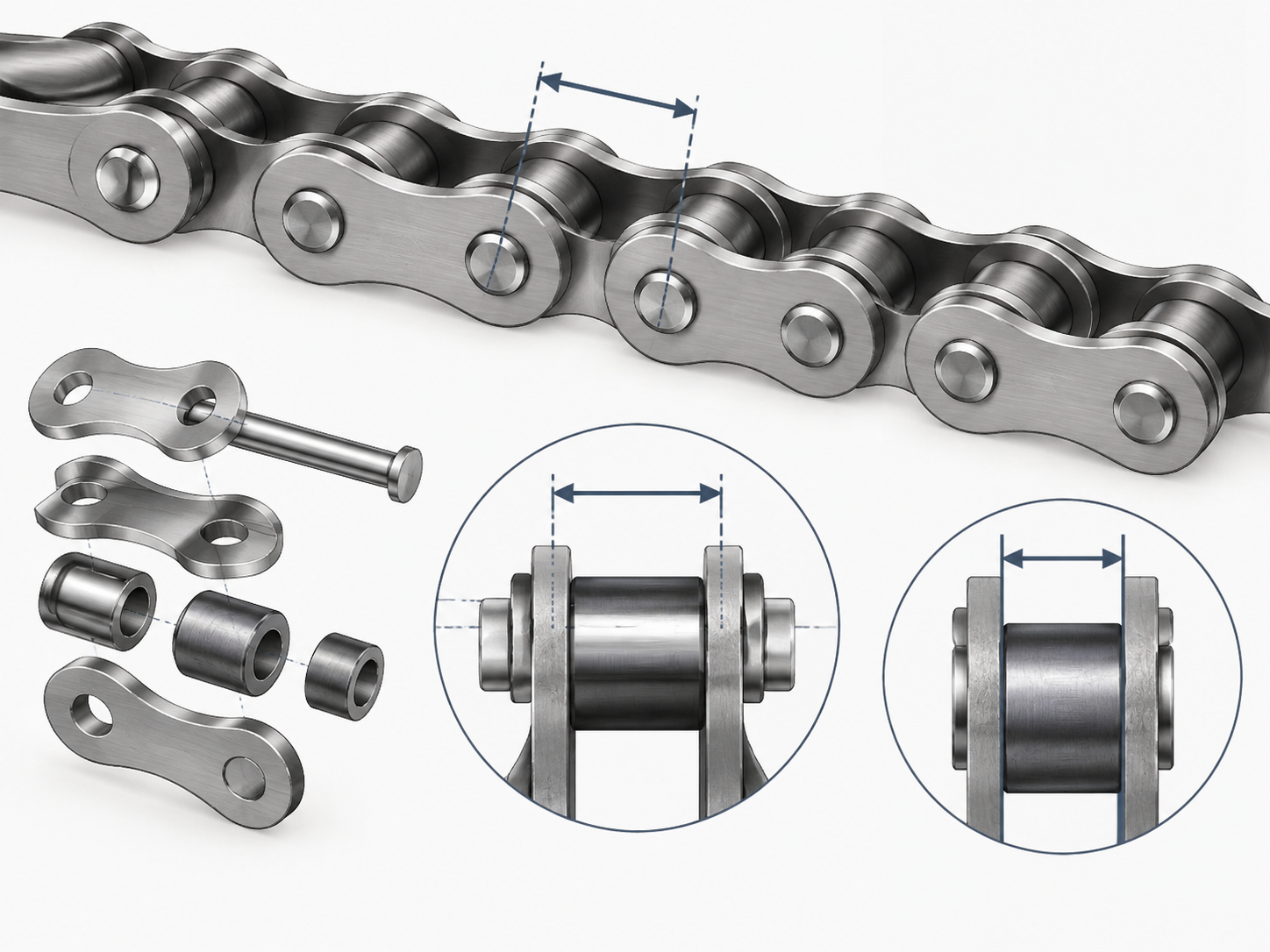
The seller does not list a chain size, pitch, width, link count, or sprocket specification for a particular product in this guide. Chain specifications vary, so no single size should be treated as universal.
| Item to compare | What to check | Why it matters |
|---|---|---|
| Chain marking | Markings stamped or printed on the existing chain | The marking may identify the chain specification more reliably than a broad vehicle label. |
| Pitch | The chain pitch listed by the replacement seller | The chain pitch must match the sprockets. |
| Width | The replacement chain's listed width and the installed chain | A visually similar chain can still be too narrow or too wide for the sprockets. |
| Link count | Count the existing chain links before removal where possible | A replacement chain with an unsuitable length may require adjustment or may not fit. |
| Master link | Match the master-link type to the replacement chain | A master link must be intended for the chain being installed. |
| Front sprocket | Chain specification, tooth count, center bore, and mounting details | Tooth count alone does not establish chain compatibility. |
| Rear sprocket | Chain specification, tooth count, center bore, mounting-hole pattern, and offset | The rear sprocket must suit the chain as well as the wheel mounting arrangement. |
Confirm each measurement against your removed part, owner manual, parts manual, or the seller's published specifications before buying.
For related sprocket checks, see the pit bike sprocket guide. Tire and wheel work needs separate measurements; the pit bike tire sizes guide covers the markings to compare.
Parts Worth Considering
A chain replacement can require checks of related parts, but this guide does not establish that any specific part needs replacement. Inspect the parts below only when their condition or compatibility is relevant to the work being planned.
- Front and rear sprockets: Confirm their chain specification before fitting a replacement chain. A chain that does not match the sprockets can create an unsafe driveline condition.
- Master link: Confirm that its type matches the chain being installed. Do not substitute a master link based only on appearance.
- Chain guide, guard, and tension hardware: Check that the replacement chain has sufficient clearance through the installed assembly. Incorrect clearance can cause interference during operation.
- Rear wheel adjustment hardware: Confirm that the wheel can be aligned and adjusted correctly after chain installation. Misalignment can affect chain tracking.
- Brake components near the rear wheel: Confirm that chain work has not disturbed brake mounting, hose routing, or wheel alignment. Incorrect brake assembly can create a crash hazard.
For broader component checks, see Pit Bike Parts Compatibility. The available information does not provide model-specific interchangeability data.
How to Measure or Confirm Before Buying
Ask: What evidence connects this replacement chain to the chain and sprockets currently installed?
- Photograph the installed chain and sprockets. Include visible chain markings, sprocket teeth, adjustment hardware, and the chain path.
- Record every marking. Copy chain markings, part numbers, and any markings on the sprockets exactly.
- Count chain links. Record the link count from the installed chain before ordering a replacement.
- Compare pitch and width. Match the replacement seller's listed chain dimensions to the existing chain or applicable manual.
- Check both sprockets. Confirm that the replacement chain is specified for the installed front and rear sprockets.
- Review the seller's fitment information. Use it as supporting evidence only when it identifies the relevant vehicle and chain specification.
- Get written confirmation when information is missing. Send the seller the chain marking, link count, photographs, and relevant measurements.
Do not operate the vehicle with a chain that does not seat correctly on the sprockets, has uncertain master-link compatibility, or cannot be aligned correctly. Chain or sprocket errors can cause loss of drive or interference with nearby components, affecting safe operation.
Children and adults may need different control reach, riding position, tire setup, and brake feel. Any chain, wheel, brake, tire, or handlebar work should preserve safe control access and proper operation for the intended rider. Do not assume that a part suitable for one rider's setup is suitable for another.
FAQ
Does a chain fit because it is listed for a pit bike?
No. "Pit bike" is a broad category label, not a chain specification. Confirm the chain marking, pitch, width, link count, master-link type, and sprocket compatibility before purchase.
Can I use chain length alone to confirm compatibility?
No. Link count is only one part of the check. The chain pitch, width, sprocket compatibility, and master-link type also need to match.
What should I do if the existing chain has no readable marking?
Measure and document the chain as carefully as possible, then compare the available information with the owner manual, parts manual, and seller's published specifications. If the seller does not list the required details, request them before ordering.
Can I choose a chain from engine displacement alone?
No. Engine displacement alone does not establish chain pitch, width, link count, sprocket mounting details, or wheel adjustment range. Confirm against the installed part or manual.
Should I replace a chain before diagnosing a drivetrain problem?
Only when the chain is identified as the issue or its compatibility is known. For broader starting diagnosis before ordering fuel or electrical parts, see Pit Bike Won't Start and Pit Bike Starts Then Dies.
Sources and evidence notes
- Yamaha: drive-chain fundamentals documents that 420 and 428 chains have different dimensions.
- JT Drive Chain range states that application charts are references and that the vehicle manufacturer's recommendation should control chain selection.
- MSF T-CLOCS checklist calls for checking chain tension at the tightest point, lubrication, and sprocket condition.
These sources support measurement and model-specific selection. They do not independently verify a chain size for an unidentified pit bike.