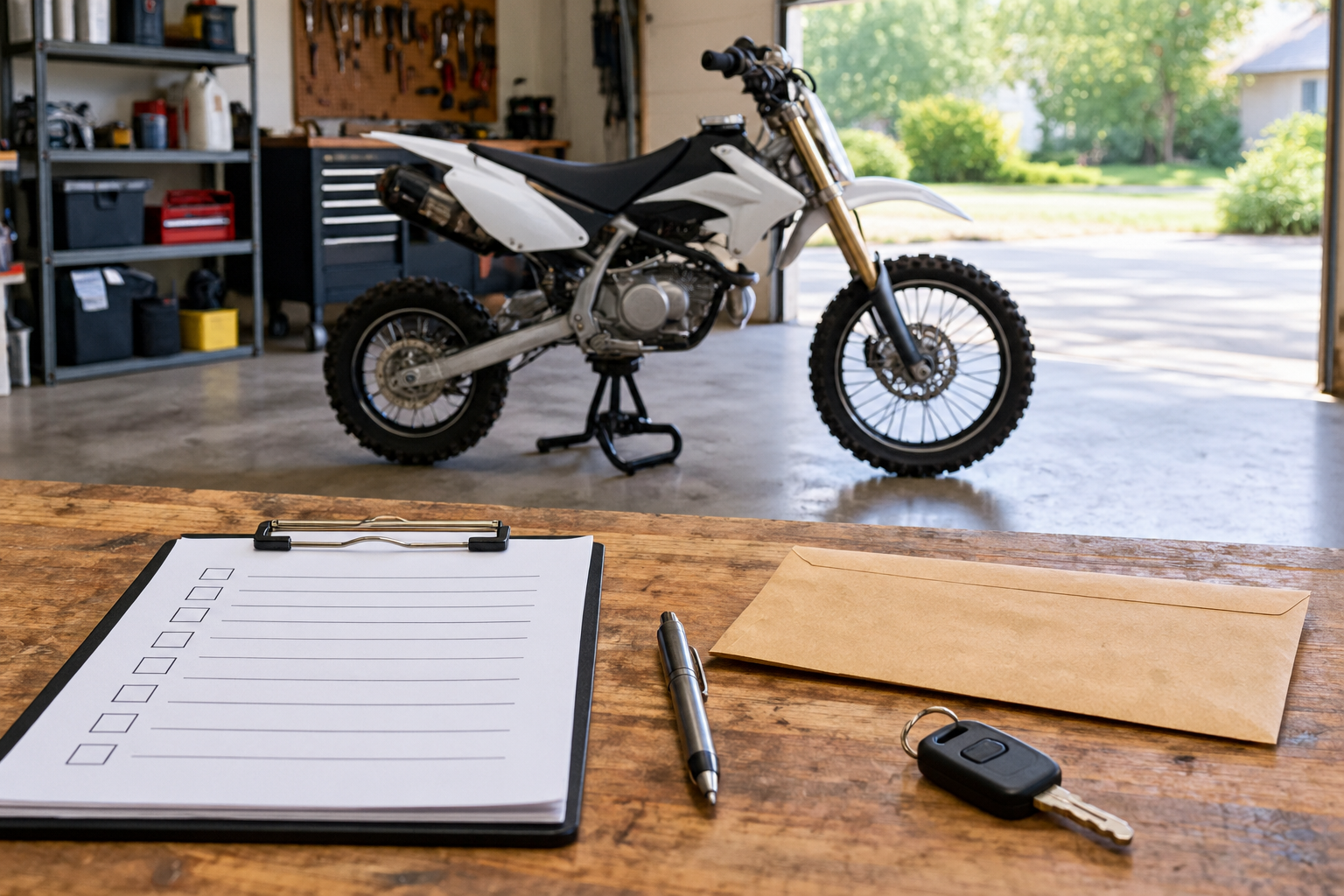
Do Pit Bikes Need Registration? State Rules Guide
TLDR: In most states, a pit bike used only on private property does not follow the same registration process as a road vehicle. Riding on public roads, however, can change the question. Registration, title eligibility, insurance, required equipment, and rider licensing rules vary by state. Check your state DMV or vehicle agency and local rules before riding anywhere other than private land. This is general information, not legal advice.
We compare published specifications, seller information, owner feedback, and ownership considerations. Legal requirements are set by government authorities, so this guide does not replace your state or local agency's guidance.
Short answer
A pit bike may need registration if you intend to use it where your state treats it as a vehicle that must be registered, such as on certain public roads or other public riding areas. Whether that is possible depends on the bike's documentation, equipment, classification, and the rules where you live.
The key trade-off is that an inexpensive off-road pit bike may be suitable for private-property riding but may not have the documents or equipment needed for a street-legal registration process. Confirm that before buying a bike for road use.
A pit bike, dirt bike, mini bike, pocket bike, and electric dirt bike can be treated differently by a state agency. A seller's category label is not necessarily the legal classification used by your state.
What the law generally is
In most states, public-road use is regulated differently from riding on private property with the landowner's permission. A pit bike marketed as off-road equipment may not automatically qualify for on-road registration.
State rules can consider several questions:
- Whether the vehicle has a title, certificate of origin, or other acceptable ownership documents.
- Whether the vehicle can be registered under a category recognized by that state.
- Whether it has the equipment required for its intended road use.
- Whether the rider needs a license, endorsement, insurance, or other documentation.
- Whether a city, county, trail system, or land manager limits motorized use in that location.
It varies by state, and local rules can add further restrictions. Do not assume a registration pathway exists because a seller calls a model a pit bike, dirt bike, mini bike, or electric bike.
For the broader road-use question, see Are Pit Bikes Street Legal?. For ownership-document questions, read Do Pit Bikes Need Registration? alongside the official guidance from your state vehicle agency.
What usually makes a bike street legal
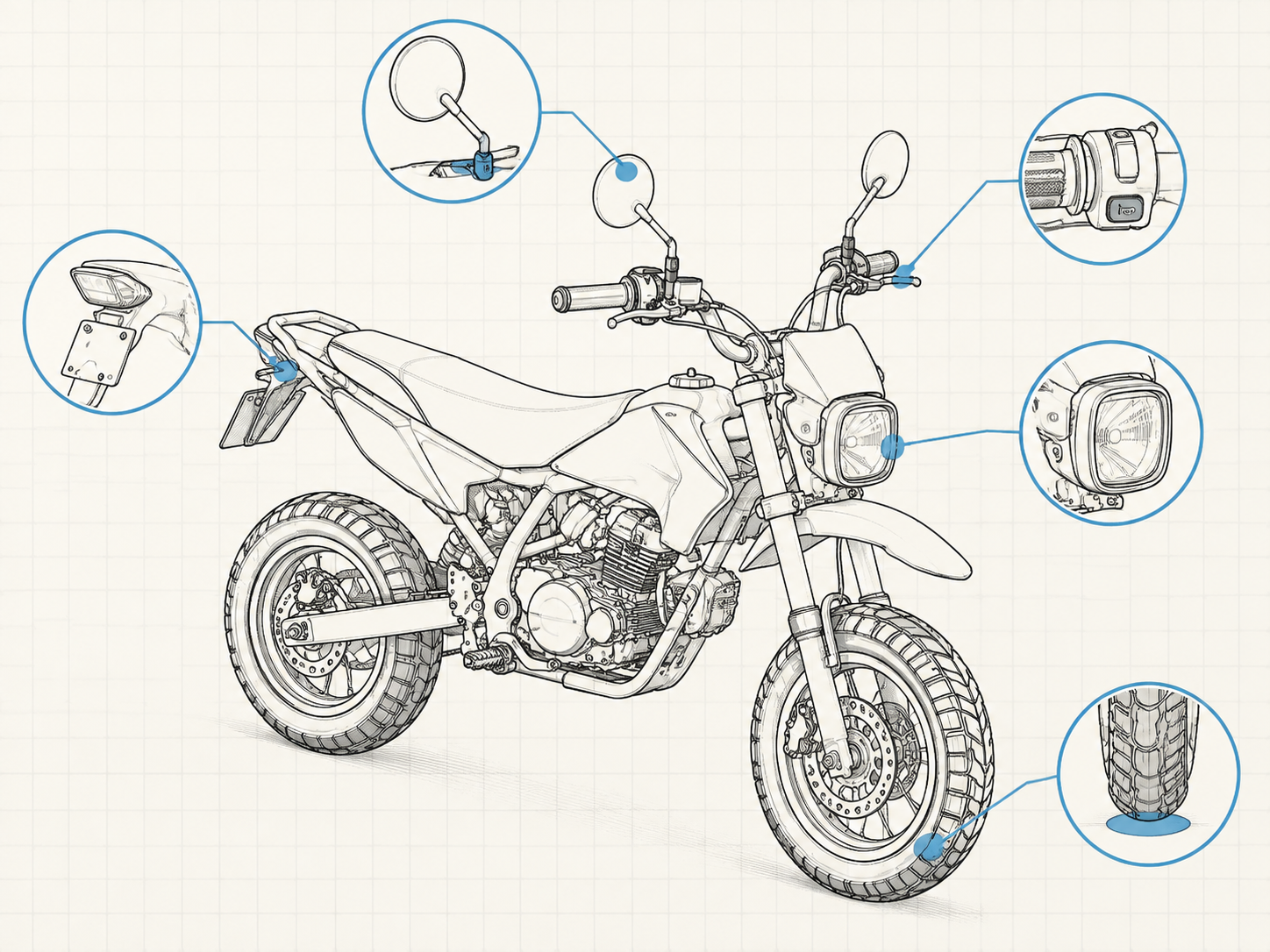
In most states, a vehicle intended for public-road use usually needs to meet more than one condition. The exact list and approval process vary by state.
| Area to confirm | Why it matters |
|---|---|
| Vehicle documents | A title, certificate of origin, bill of sale, or other ownership record may be needed for registration or title review. |
| Vehicle classification | The state must recognize a category under which the vehicle can be registered. |
| Required road equipment | Lighting, mirrors, brakes, tires, signaling equipment, and other items may be reviewed under state rules. |
| Registration and plate | A plate or registration may be required before public-road use, depending on the jurisdiction and vehicle type. |
| Insurance and rider credentials | A state may require insurance, a license, or a motorcycle endorsement for the intended use. |
| Local access rules | A registered vehicle may still be restricted from particular roads, trails, parks, or public land. |
Do not buy parts solely because they appear on a street-legal checklist. Adding equipment does not guarantee that a pit bike can be titled, registered, or legally operated on a public road. That uncertainty matters most for buyers whose primary goal is commuting or neighborhood road use.
Before modifying a bike, check the official state vehicle agency site, local government guidance, and the rules for the specific property or trail system. Keep the seller invoice, certificate of origin if supplied, and any prior ownership documents.
A model page may identify a bike as off-road in its seller listing, but that does not settle legal status. For example, the listing language on the Apollo DB32 should be treated as product information, not as a determination from a state registration authority.
Safety gear
Registration status does not reduce the need for protective equipment. A pit bike can cause injury on private land, a track, or a public route.
Use riding gear suited to the type of riding and the rules where you ride:
- A properly fitted motorcycle or off-road helmet.
- Eye protection where the helmet does not provide it.
- Gloves that protect hands while allowing reliable control use.
- Boots that cover and support the ankle.
- Long pants and a riding jersey or other abrasion-resistant clothing.
- Chest, back, knee, and elbow protection when appropriate for the riding environment.
A helmet alone does not address brake condition, chain condition, throttle return, tire condition, or loose fasteners. Use the pit bike safety checklist before each ride, especially after transport, storage, or repairs.
Brake problems change the decision from "ride carefully"to "do not ride until corrected."See the pit bike brake adjustment guide if the brake controls need service.
FAQ
Do pit bikes need registration on private property?
In most states, private-property use with the landowner's permission is handled differently from public-road use. It still varies by state, and property-specific rules, insurance conditions, noise limits, and local ordinances may apply. Check before riding.
Can I register an off-road pit bike for the street?
Possibly, but not every off-road pit bike will be eligible. Registration may depend on documentation, vehicle classification, required equipment, inspection procedures, and state rules. Confirm eligibility with your state vehicle agency before buying the bike or street-equipment parts.
Does a headlight make a pit bike street legal?
No automatic conclusion follows from adding a headlight. In most states, street legality involves the vehicle's registration eligibility, required equipment, documentation, rider requirements, and where it is used. It varies by state.
Do electric pit bikes need registration?
The available information does not support one answer for every electric model or state. An electric dirt bike, electric mini bike, or other electric two-wheeler may be classified differently based on its design and local rules. Confirm the classification with the relevant state agency rather than relying on the product's marketing label.
Should I carry proof of ownership?
Keeping your purchase records and any supplied ownership documents is sensible. A state agency, law-enforcement officer, insurer, buyer, or land manager may request documentation depending on the situation. Ask your state vehicle agency which documents it accepts for registration or title review.
External verification sources
These links are used to verify the method, named product, or jurisdiction example described above. They do not replace the exact bike manual or the rules where the rider lives.
- California DMV vehicle definitions - official state classification example.
- California DMV off-highway vehicle registration - official OHV registration example.
- New York DMV vehicle registration - official state registration process reference.